
Last updated November 15, 2026
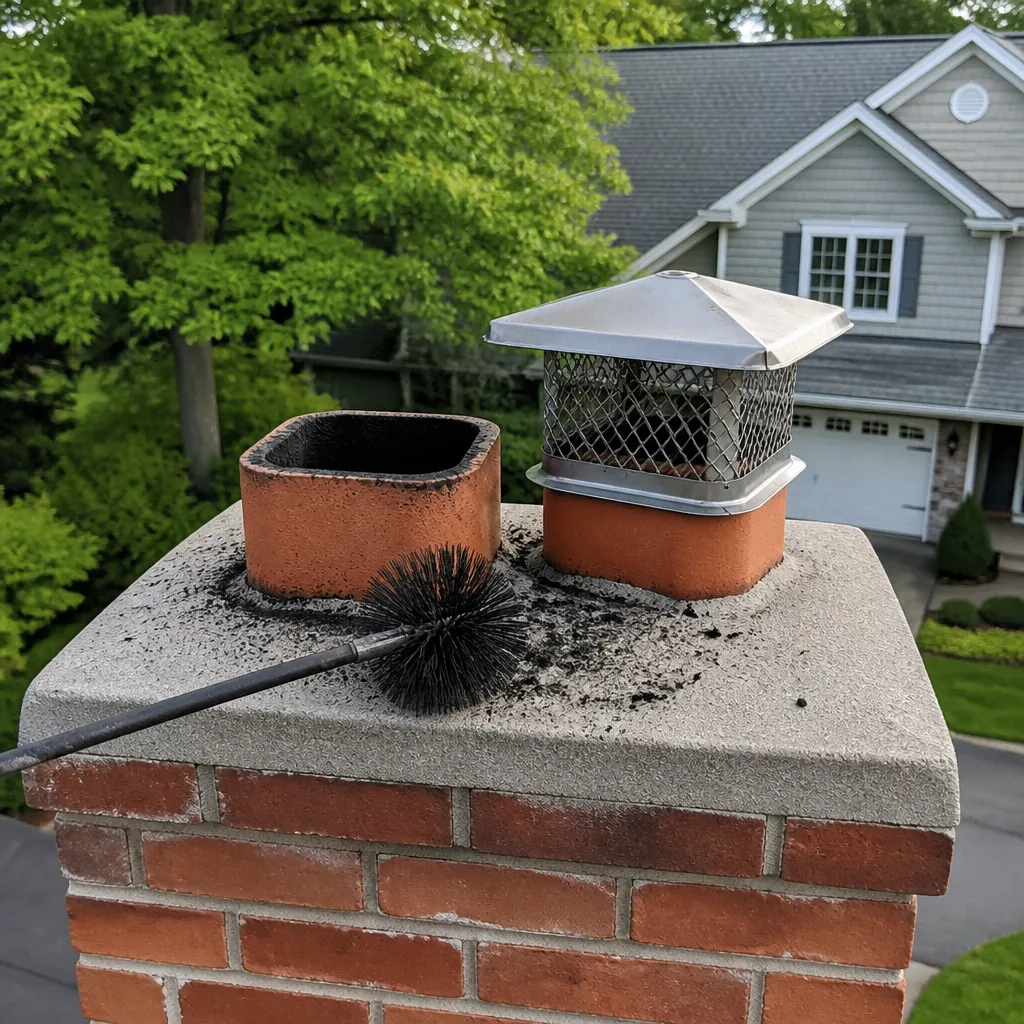 Sweep & inspection
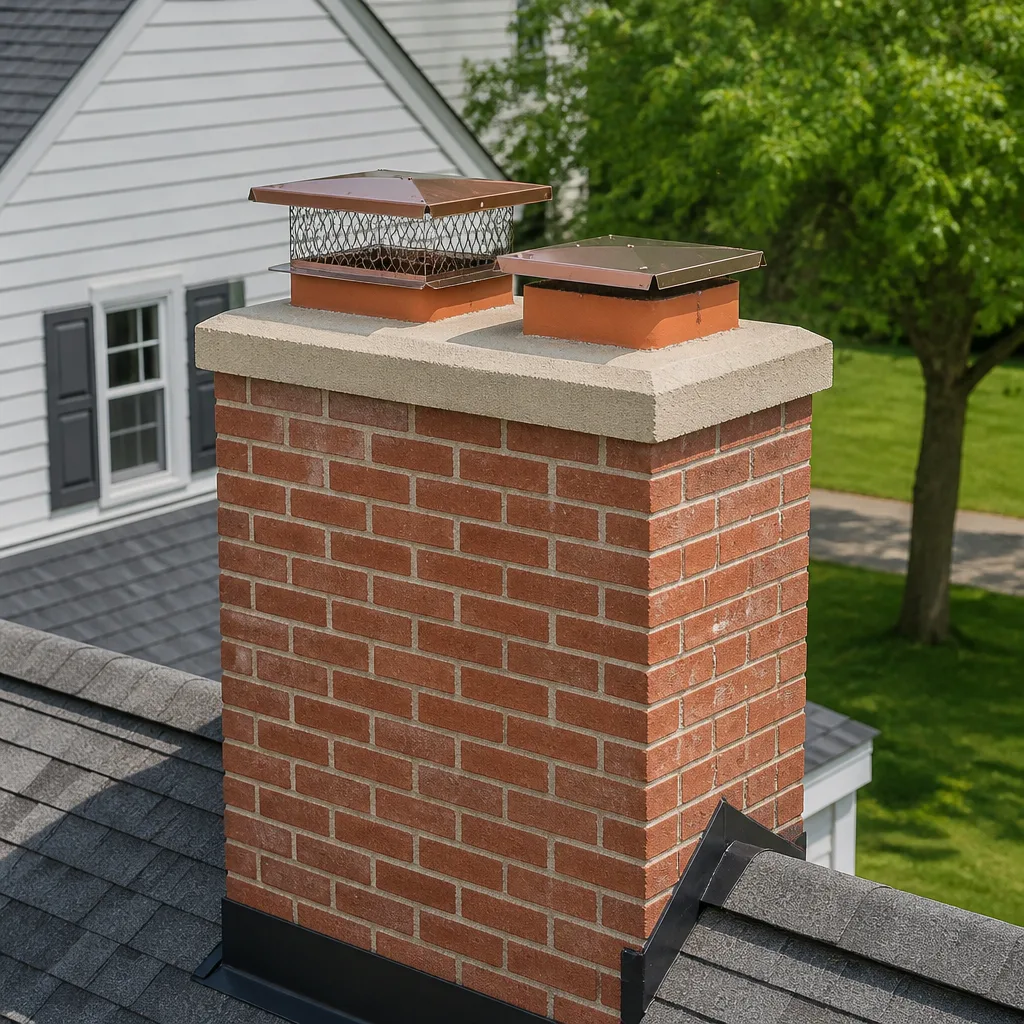 Caps & crowns
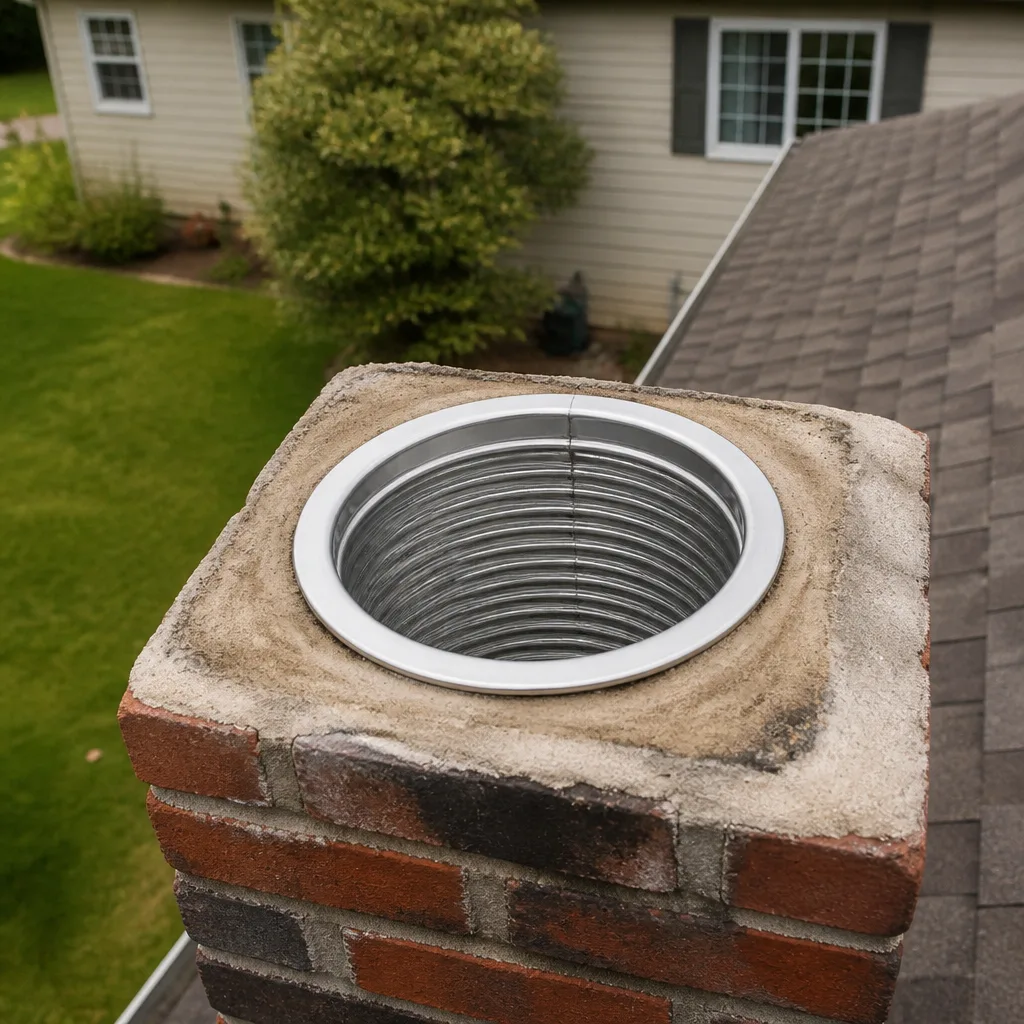 Flue relining
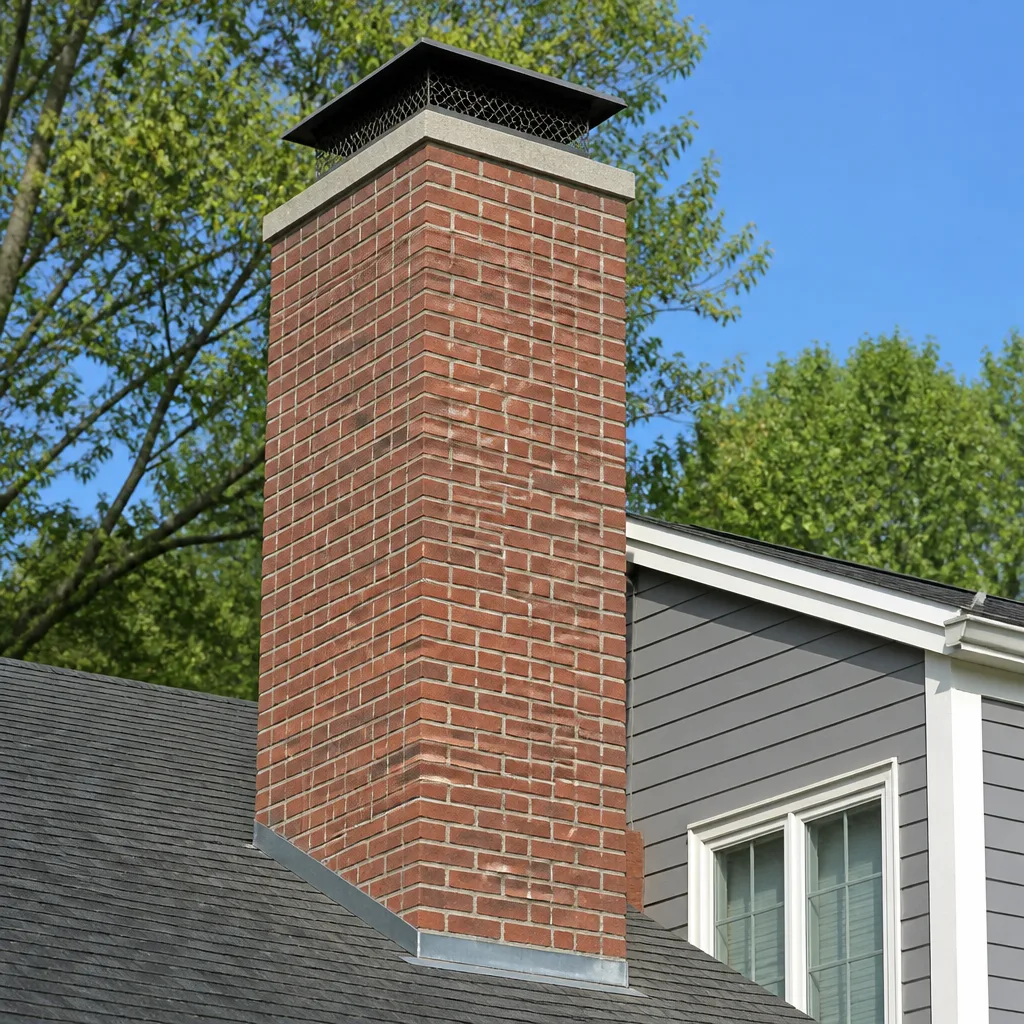 Masonry repair
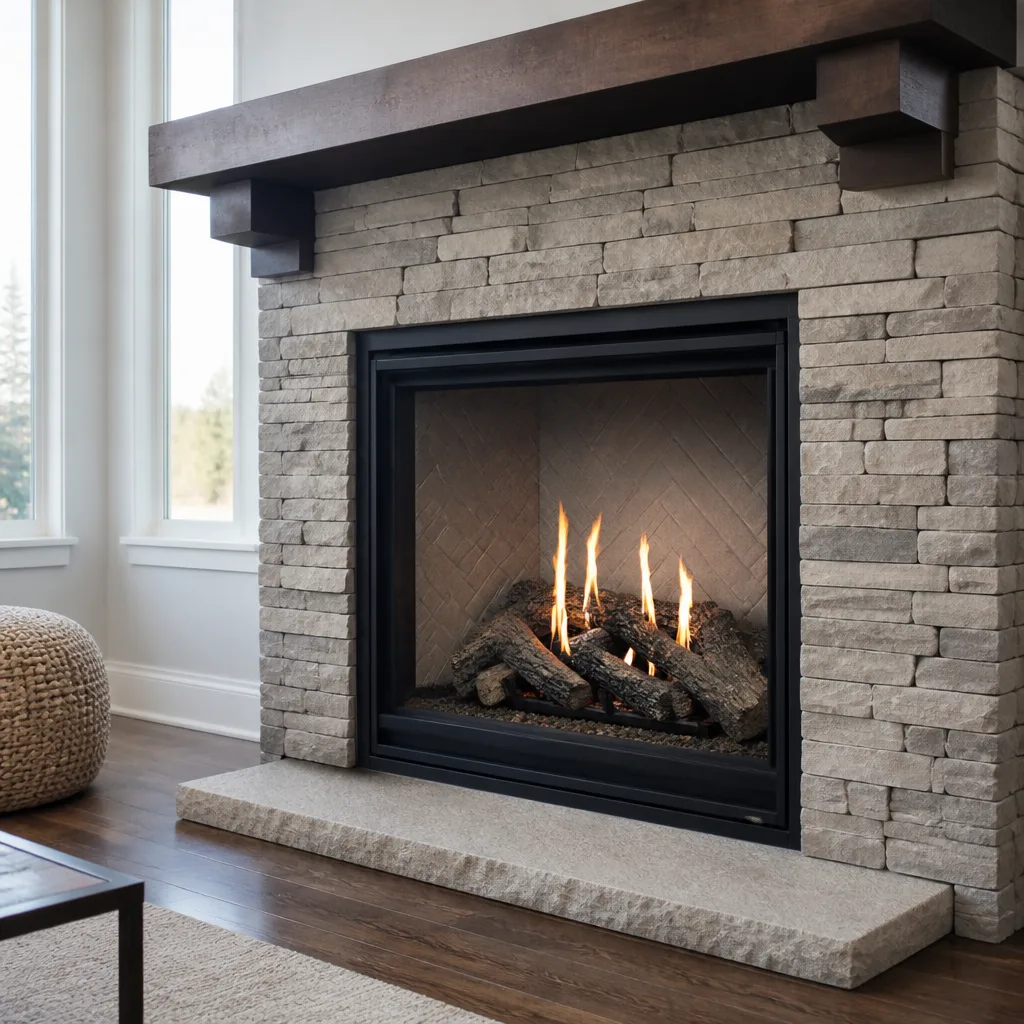 Gas fireplace service
Level 1 sweep and inspection to the NFPA 211 annual standard - flue, crown, cap, and flashing checked and photographed
Chimney sweep logs do not sweep chimneys. They loosen some creosote - which then falls where a brush and vacuum still have to collect it.
How to Hire a Chimney Cleaning Contractor in Edinburg: A Step-by-Step Guide
Texas does not license chimney sweeps. That surprises most homeowners, and it should. Anyone who owns a brush and a shop vacuum can legally knock on your door in Edinburg, quote you a flat rate, and call what happens next a chimney cleaning. Some of them do honest work. Plenty don’t, and the difference shows up months later as a cracked flue, a draft that won’t draw, or an insurance adjuster asking who serviced the chimney and what their credentials were. This guide walks you through screening a chimney contractor the way a specialist would: certification you can verify, five questions to ask before booking, red flags that are specific to the South Texas market, and how to read a quote so you know what’s missing from it. By the end you’ll know exactly what separates a cleaned chimney from a safely serviced one.
Quick Answer
To hire a chimney cleaning contractor in Edinburg, confirm CSIA certification through the Chimney Safety Institute of America’s public database, ask five questions before booking (inspection level included, equipment used, liability insurance, written report, repair product lines stocked), and insist on a written quote with line items for sweeping, inspection, and any recommended repair. A legitimate sweep will answer all of it without hesitation and give you a report you can keep. One who can’t name the liner system they’d use for a repair, or who won’t put an inspection level in writing, isn’t a chimney specialist.
If you want to skip the screening and talk to a chimney-only specialist now, call (833) 754-6303. We answer 24/7. Fast dispatch from 7am to 7pm, Sunday through Friday.
Styles & brands we work with
- Sweep & inspection
- Caps & crowns
- Flue relining
- Masonry repair
- Gas fireplace service
Table of Contents
- Why Hiring a Chimney Sweep in Edinburg Is Different From Other Trades
- What CSIA Certification Actually Means (And How to Verify It)
- The Five Questions to Ask Before You Book
- Red Flags Specific to the South Texas Market
- Why a Generalist Creates Liability Gaps You Won’t See Until a Claim
- How to Read a Chimney Quote Line by Line
- Specialist Versus Generalist: What Actually Changes on the Job
- Getting Your Edinburg Home Ready for the Sweep
Why Hiring a Chimney Sweep in Edinburg Is Different From Other Trades
In most states, the person who cleans your chimney has passed a licensing exam, carries a bond, and works under a state board that can pull their credential. Texas has none of that structure for chimney work. The state licenses plumbers, electricians, and HVAC contractors. It does not license chimney sweeps. That single fact reshapes how you should shop.
For plumbing or electrical, you can ask for a license number and check it against a state database in about 90 seconds. For a chimney cleaning in Edinburg, you’re relying on voluntary certification, insurance, and the contractor’s willingness to put their scope of work in writing. That’s a different kind of due diligence, and it rewards homeowners who ask better questions.
The practical result is a market with a very wide quality range. On one end you have chimney-only operations that stock professional liner systems and train technicians specifically on flue systems. On the other, you have HVAC technicians who add chimney cleaning as a seasonal add-on, handymen who buy a brush kit at a big-box store, and pressure-washing companies that pivot to “chimney services” in the cooler months. All of them can legally charge you for a cleaning in Edinburg.
This doesn’t mean every generalist does bad work. It means you can’t assume competence from a business card, a truck wrap, or a low flat rate. You have to look for evidence of training and specialization, and you have to know what that evidence looks like. That’s the entire purpose of the sections that follow.
What CSIA Certification Actually Means (And How to Verify It)
CSIA stands for the Chimney Safety Institute of America. It’s a nonprofit that runs the most widely recognized certification program in the chimney trade. A CSIA Certified Chimney Sweep has passed an exam covering codes, venting, inspection standards, and safety practices, and holds a certification that must be renewed on a fixed cycle.
Here’s the part most homeowners miss: certification is individual, not company-wide. A company that advertises “CSIA certified” may have one certified technician and five uncertified ones, or may have let the certification lapse and never updated the website. The word on the truck isn’t the credential. The name on the database is.
How to verify a CSIA certification
- Go to the CSIA’s public website and open its locator or certification lookup tool. It’s free and open to the public.
- Search by the technician’s name or the company’s name, using the exact spelling on their card or website.
- Confirm the certification is current, not expired. The listing typically shows renewal status.
- Confirm the person coming to your home is the person listed, or ask which certified technician will be on site and how the company’s work is supervised if it’s a helper.
- Ask how the company handles the written inspection report and whether the certified technician signs off on it.
The verification takes five minutes. It’s also the single highest-yield thing you can do before booking a chimney sweep. If a contractor gets defensive about the question or tells you their certification “doesn’t show up online right now,” that’s an answer in itself.
What certification does not cover
CSIA certification doesn’t guarantee the work will be done well. It confirms the technician has been tested on the standards. What it does guarantee is that if something goes wrong, there’s a structure to complain to and a standard of practice you can point to. That matters far more in a state with no licensing than most homeowners realize.
The Five Questions to Ask Before You Book
These questions separate a chimney specialist from someone who owns chimney-shaped equipment. Ask them on the phone before you book, not when the technician is standing in your living room. A professional will answer each of them in one sentence without thinking about it.
1. What inspection level is included in the price?
The National Fire Protection Association publishes NFPA 211, which defines three inspection levels. Level 1 is a visual check of accessible parts of the chimney and firebox. Level 2 adds a camera inspection of the flue interior and is the standard for a new home purchase, an appliance change, or a chimney that’s had a fire event. Level 3 is invasive and involves opening walls. A legitimate sweep names the level in the quote. A vague answer like “a standard inspection” usually means a Level 1 visual with no camera.
2. What equipment will you use?
The answer should include a professional rotary brush set matched to the flue material, a HEPA vacuum or equivalent sealed system that keeps dust out of the room, and for a Level 2 inspection a flue camera. Hand brush and shop vacuum is not the same thing, and it tells you the person is working below professional standards. Camera inspection matters because a visual look down a flue can miss a cracked tile or an offset joint five feet up.
3. Do you carry liability insurance?
Ask for the certificate of insurance, and ask for it by email. Liability coverage matters in a chimney because damage caused by a technician to a flue liner, a firebox, a damper, or a roof isn’t always obvious. When it’s not obvious, you need coverage behind the person who did it. A contractor who can’t produce a COI on request is a contractor you pass on.
4. Will you provide a written report?
The answer should be yes, and the report should note what was inspected, what was found, what condition each component is in, and any recommendations with photos. A report the homeowner can keep is the difference between an inspection and a conversation. It’s also the document an insurance adjuster or a home buyer will ask for.
5. What product lines do you stock for repairs?
This is the question that separates a real chimney contractor from a generalist. Professional chimney repair uses specific products: DuraFlex for flexible stainless liner systems, HeatShield for ceramic flue resurfacing, Olympia Chimney and Copperfield for components and supplies, Gelco for caps, Famco for venting. A generalist who cleans chimneys on the side doesn’t stock or specify those. They’ll improvise. Asking the question before you book tells you whether the person on the phone can name a product system, or whether they’ll get quiet and change the subject.
At Chimney Sweep Edinburg, we work exclusively with DuraFlex, HeatShield, Olympia Chimney, Copperfield, Famco, and Gelco, because the repair materials determine whether a fix lasts. If we can’t specify the right product for your specific flue, we don’t quote the job.
Red Flags Specific to the South Texas Market
The chimney market around Edinburg has a few patterns worth knowing. Some are seasonal, some are price-based, and a few are specific to how repair work gets sold. Here’s what to watch for.
Unusually low flat-rate pricing
A chimney cleaning offered at a price far below the typical range should prompt a question: what’s included? Often the low flat rate covers a hand brush pass and nothing else. No camera, no written report, no CSIA-certified technician on site. In a market where a proper Level 2 inspection involves a camera and a report, the pricing has to reflect it. A quote that doesn’t is telling you what’s being left out. The right response isn’t always the next cheapest quote; it’s the quote that names what’s included.
No written inspection report offered
If the contractor tells you your chimney “looks fine” and hands you an invoice, you have no record of anything. No record means you can’t verify the inspection happened, you can’t prove a condition existed before a repair, and you can’t show a home buyer or insurer what was found. In our experience working Edinburg homes, this is the single most common way homeowners end up paying twice.
Can’t name the liner system brand they’d use
Ask directly: “If my flue needs a liner, what system would you install?” A chimney specialist names the system and can explain why that system suits the flue. A generalist either can’t name it or names a generic “stainless liner” without a brand. Liner systems are not interchangeable. A flexible liner spec’d for one flue may be wrong for another, and the installation details matter as much as the product.
Add-on sales pressure during the sweep
A sweep who finds a legitimate issue during a sweep will show you the photo, explain the condition, and let you decide. A sweep who finds “urgent” damage on every visit, with a repair quote in the thousands and no photos, has told you what kind of operation they run. Ask for the camera evidence. If it exists, fine. If not, the recommendation doesn’t matter yet.
Pressure-washing or HVAC trucks doing chimney work
Chimney work requires tools, materials, and training specific to flue systems. A pressure-washing company that pivots to chimney cleaning in cooler months is using a different skill set. So is an HVAC technician who adds chimney cleaning to a service menu. There’s nothing wrong with an HVAC tech being an HVAC tech. It’s a problem when the same person is asked to inspect a flue liner and specify a repair. The specialist focus exists for a reason.
Why a Generalist Creates Liability Gaps You Won’t See Until a Claim
Here’s the part that catches homeowners off guard. The failure you care about most isn’t a chimney that doesn’t work. It’s a chimney that works fine until it doesn’t, and by then there’s a claim on the table and a contractor who can’t help you defend it.
The scenario plays out like this. A generalist cleans the chimney, tells the homeowner it’s in good shape, and moves on. A year later there’s a chimney fire, or carbon monoxide gets into the home, or a home sale inspection finds a cracked flue tile that was always there. The homeowner files a claim or disputes the inspection. The insurer asks who serviced the chimney, what scope of work was documented, and whether the contractor was certified. The answers are thin. The generalist had no CSIA certification, no written Level 2 report, no camera images, and no product line spec on file.
That’s a liability gap. It shows up the moment you need a record and there isn’t one. It’s not that the generalist did anything wrong. It’s that there’s no evidence of what they did, no standard they were measured against, and no professional organization standing behind the work. The homeowner eats the difference.
A chimney specialist reduces that gap in three ways. First, the certificate is verifiable. Second, the inspection produces a report with a stated level. Third, the recommendations cite specific products, which ties the repair to a known system. If a claim ever happens, you have a paper trail that shows the work was done to a standard. That’s the thing you’re actually buying when you hire a specialist, and it’s why the correct comparison isn’t “what does the cleaning cost today” but “what does the cleaning plus the documentation cost.”
How to Read a Chimney Quote Line by Line
A chimney quote should look like a plumber’s quote, not a contractor’s handshake. Every line should name a scope, a standard, and a deliverable. Here’s what should always appear.
What a complete chimney quote includes
| Line item | What it should say |
|---|---|
| Sweeping scope | The flue(s) to be swept, the brush method, and whether the firebox, smoke chamber, and damper are included |
| Inspection level | The NFPA 211 level performed (Level 1, 2, or 3), what it covers, and whether a camera is used |
| Written report | That a written report with photos will be provided, and when |
| Insurance and certification | CSIA certification reference, and liability insurance on request |
| Repair recommendations (if any) | Each recommendation with its product system named (DuraFlex liner, HeatShield ceramic resurfacing, Olympia Chimney components), not just a description |
| Separate pricing for repairs | Repairs priced separately from the sweep and inspection, so you can defer what can safely wait |
What shouldn’t appear, or should concern you if it does
- Bundled “package” pricing with no itemization. If a sweep, inspection, and repair are one number, you’re paying for the highest line whether you need it or not.
- A repair quote without a product system named. An un-named “liner replacement” can’t be compared shop to shop, because you don’t know what’s being installed.
- Recommendations without photos or camera evidence. If the finding isn’t visible to you, it isn’t yet a finding.
- No scope language for firebox or damper. If the quote covers “chimney cleaning” but doesn’t specify which components are included, it’s not a scope. It’s an intention.
- No mention of what happens if repairs aren’t done. A good quote says what can safely wait.
If your quote passes those checks and the person on the phone can answer the five questions, you’ve done the hard part. The rest is scheduling the work. If it’s for a chimney repair, ask the same questions about the repair scope and confirm the system being installed matches your flue.
Specialist Versus Generalist: What Actually Changes on the Job
The difference between a chimney specialist and a generalist isn’t marketing language. It’s what the technician knows how to do and what they have on hand when the job goes sideways. Chimney work goes sideways often, because flues are rarely standard and older homes rarely match the drawings.
Where a specialist pulls ahead
- Product knowledge. A specialist knows which DuraFlex liner suits an offset flue, what HeatShield ceramic resurfacing is appropriate for, and where an Olympia Chimney component solves a problem that a generic fitting won’t. That knowledge isn’t cosmetic. It determines whether the repair lasts.
- Non-standard flue handling. A flexible liner system like DuraFlex exists because flues have offsets, bends, and cross-sections that a rigid liner can’t navigate. A generalist who’s never installed one will default to a repair that fits the equipment they own, not the flue they’re looking at.
- Ceramic resurfacing as an option. HeatShield is a professional-grade ceramic resurfacing system that restores a damaged flue interior without a full reline. It’s a repair option many generalists don’t carry or don’t know how to apply, which means the homeowner either pays for a full liner or gets no repair at all.
- Camera inspection as routine. A specialist runs a camera on a Level 2 inspection as standard procedure. A generalist may not own the equipment. A video inspection changes what’s found, especially in the older masonry chimneys around Edinburg.
- A single point of contact. When inspection, sweeping, and repair are handled by the same shop, the person who found the problem is the person who quotes the fix. There’s no gap for the recommendation to get lost in.
We’re chimney-only. Every technician we work with is trained on flue systems, not splitting time between chimneys and unrelated trades. That focus is why our technicians have up to 8 years of experience with the products and problems specific to this work. It’s also why we can tell you when a repair can wait and when it can’t, without guessing.
Getting Your Edinburg Home Ready for the Sweep
Edinburg’s winters are mild, which has an upside and a downside for chimney owners. The upside is that the heating season is short and chimneys see less use than they would up north. The downside is that a chimney used only a few times a year is a chimney that’s easy to forget, and light use doesn’t mean no creosote. It just means the buildup happens slowly, over several seasons, with fewer reminders to check.
Mild climate also changes what you should expect from an inspection. There’s no hard freeze to crack masonry through expansion, but the region does have a fire season, and burning in dry conditions means paying attention to what comes out of the chimney and what builds up in it. Creosote is still the primary fire risk in a wood-burning system, and it accumulates whether the winter is severe or mild.
Simple prep before the sweep arrives
- Clear the hearth and the floor in front of the fireplace. Move furniture, rugs, and anything sitting in the drop zone.
- Remove any fireplace screen, grate, andirons, and log holder so the technician has open access to the firebox.
- Don’t burn for at least 24 hours before the appointment, so the flue is cool and any ash has settled.
- Secure pets in a room away from the work area. The vacuum is loud and pets are better off elsewhere.
- Note any symptoms: smoke coming back into the room, a smell when the fireplace isn’t in use, a damper that sticks, or a fire that burns poorly. Tell the technician. These narrow down what the inspection should focus on.
- Have your insurance paperwork and any previous chimney reports handy. A new report is more useful when it can be compared to an old one.
If you’re in the Indian Hills area or anywhere else in the Edinburg market and you want to know whether a sweep is due for your home, the honest answer depends on how much you burn. Annual is the general rule for a wood-burning fireplace. If you burn less, a sweep may hold for longer between appointments, but an inspection still tells you the state of the flue. For a broader overview of how we handle the full cycle, see Chimney Sweep Edinburg.
Common Mistakes to Avoid
- Booking on price alone. A low flat rate often means a hand brush, no camera, and no written report. You don’t save money if the inspection is missing the thing you hired them to find.
- Not verifying CSIA certification. The word on the truck is not the credential. Five minutes on the CSIA public database is the difference between a certified technician and a claim.
- Accepting a repair recommendation without photos. If you can’t see the condition, you can’t evaluate the fix. Camera evidence should come with any repair recommendation in Edinburg.
- Letting a generalist name a repair without naming a product. “A stainless liner” isn’t a specification. The system matters, and so does the reason it was chosen for your flue.
- Skipping the written report. A report is what protects you at a home sale and in an insurance claim. No report means no record.
- Burning without annual maintenance because the winter was mild. Light use doesn’t remove creosote. It just slows the buildup and reduces the reminders.
- Combining chimney work with an unrelated trade to save a call. One-stop convenience isn’t worth a repair built from products the installer doesn’t know. A chimney specialist exists for a reason.
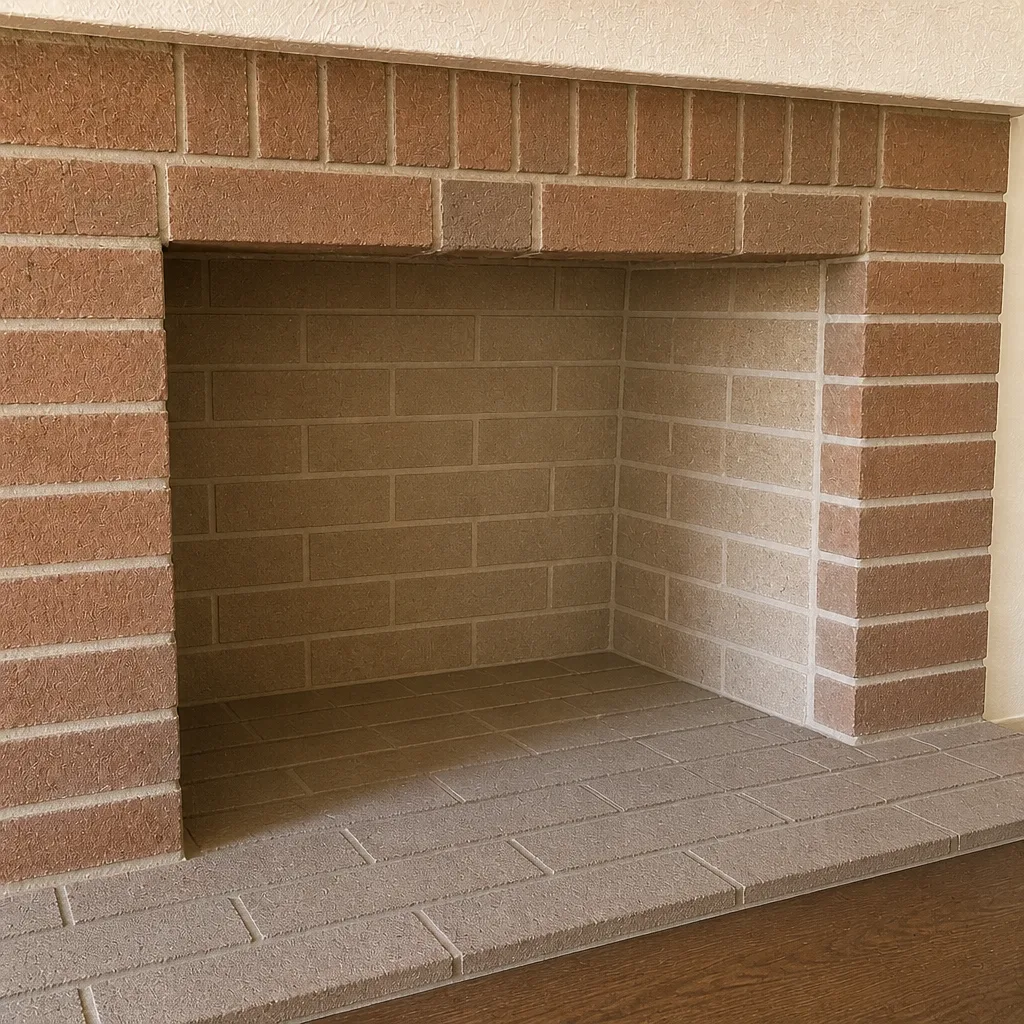
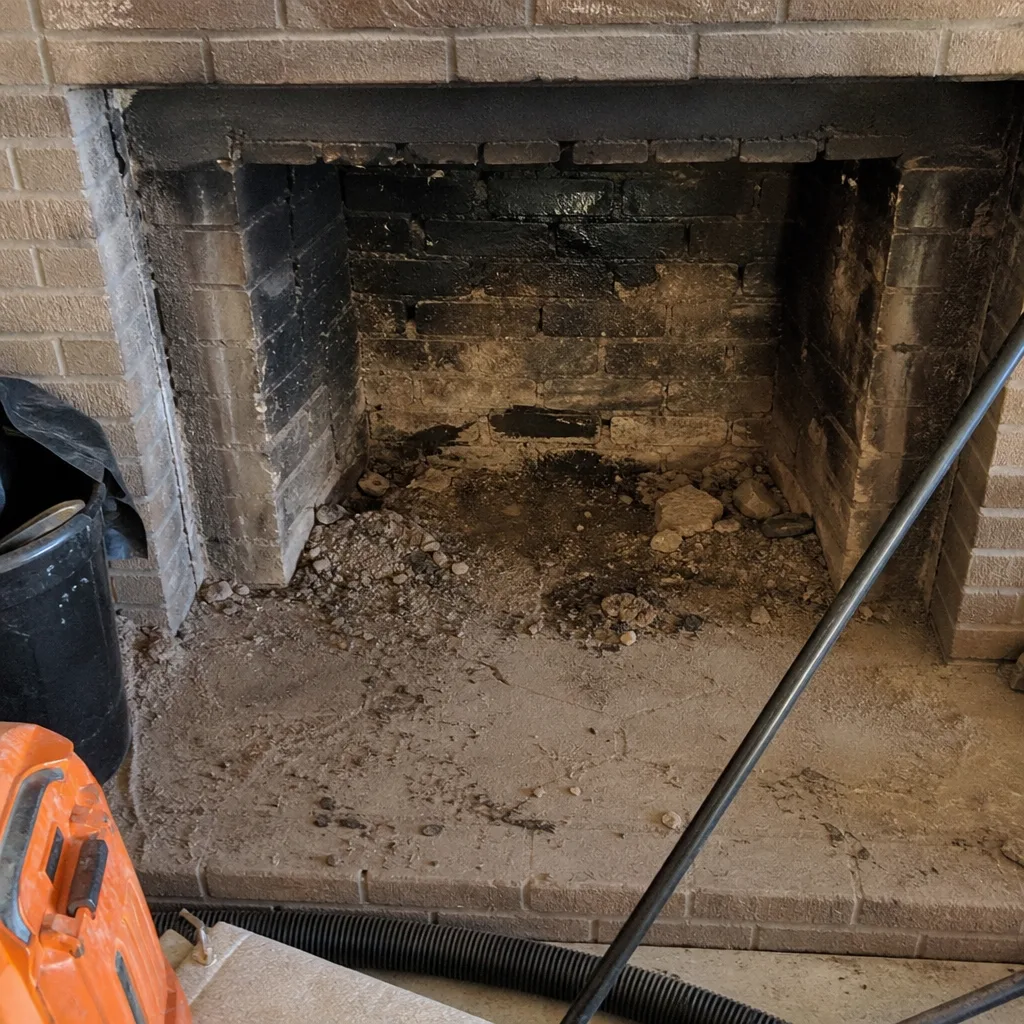
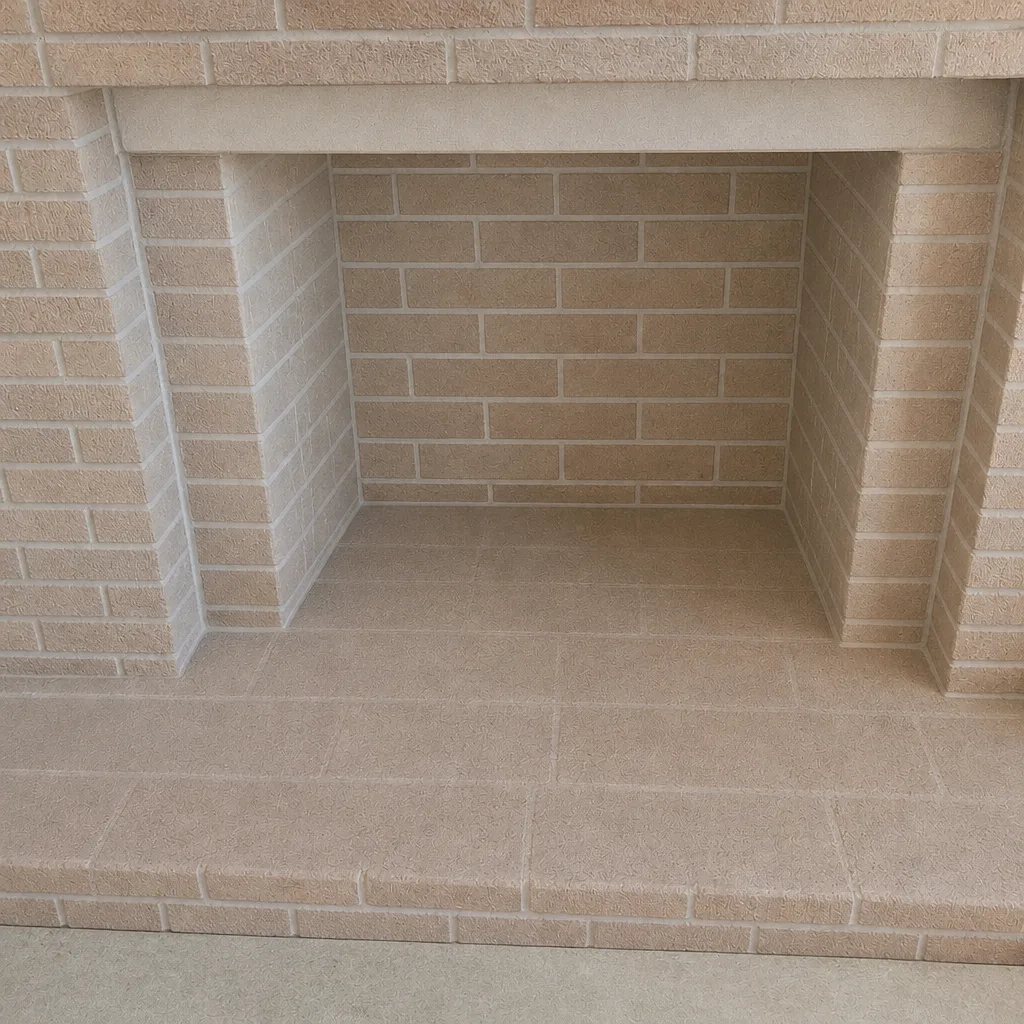
See the difference
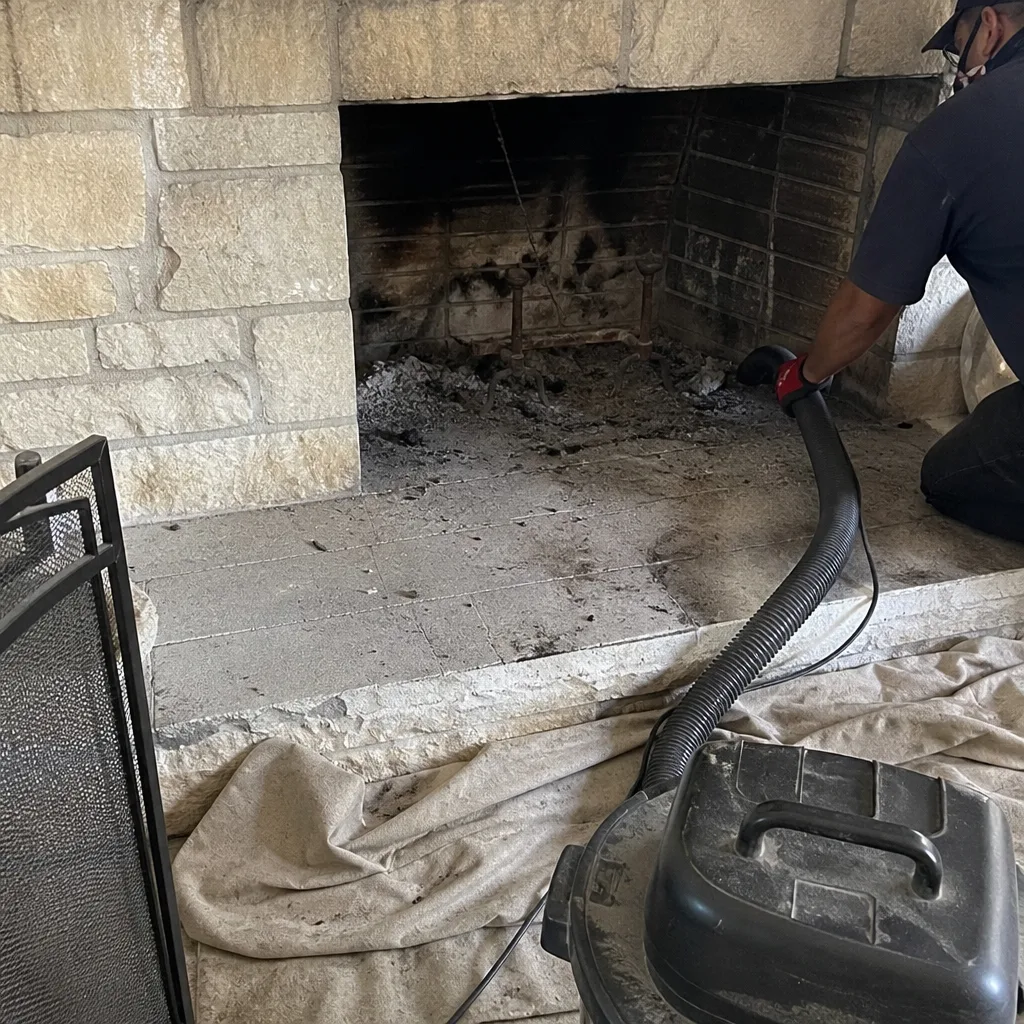 Before
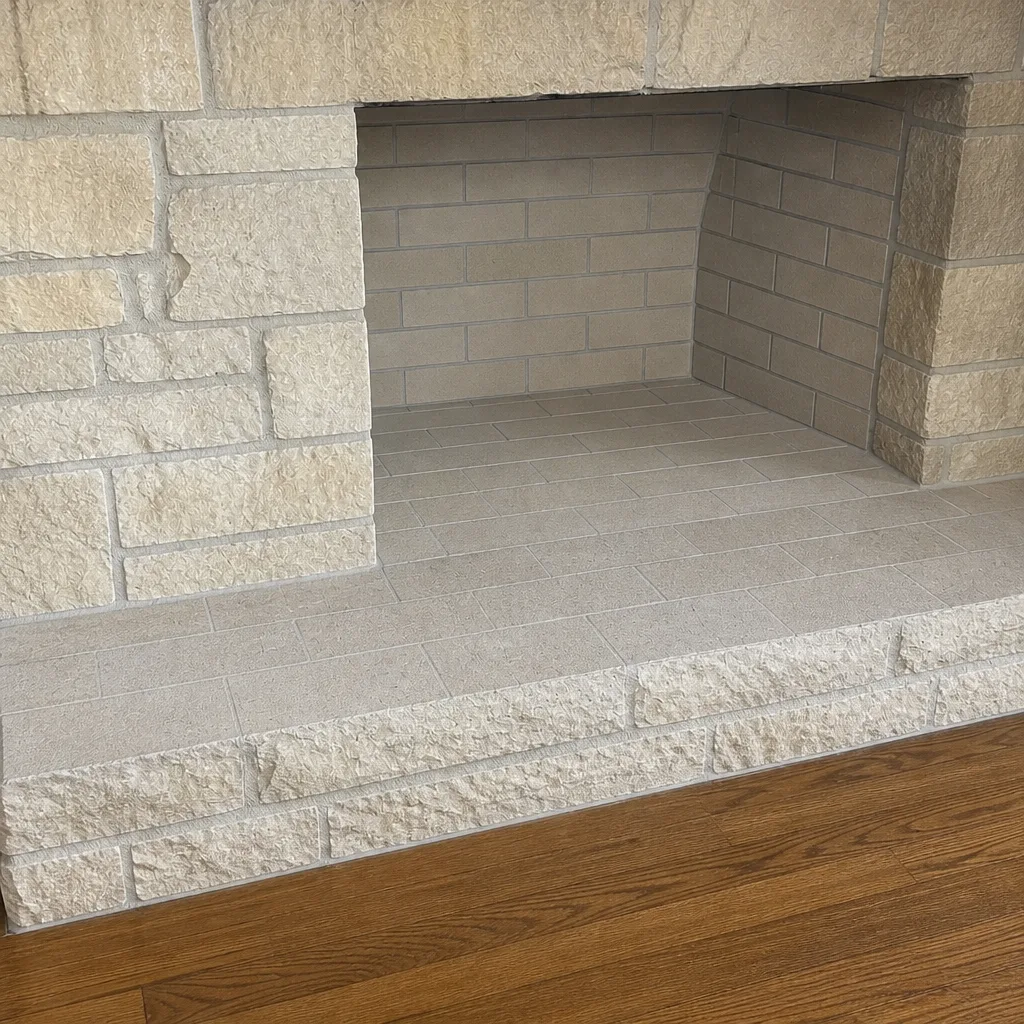 After
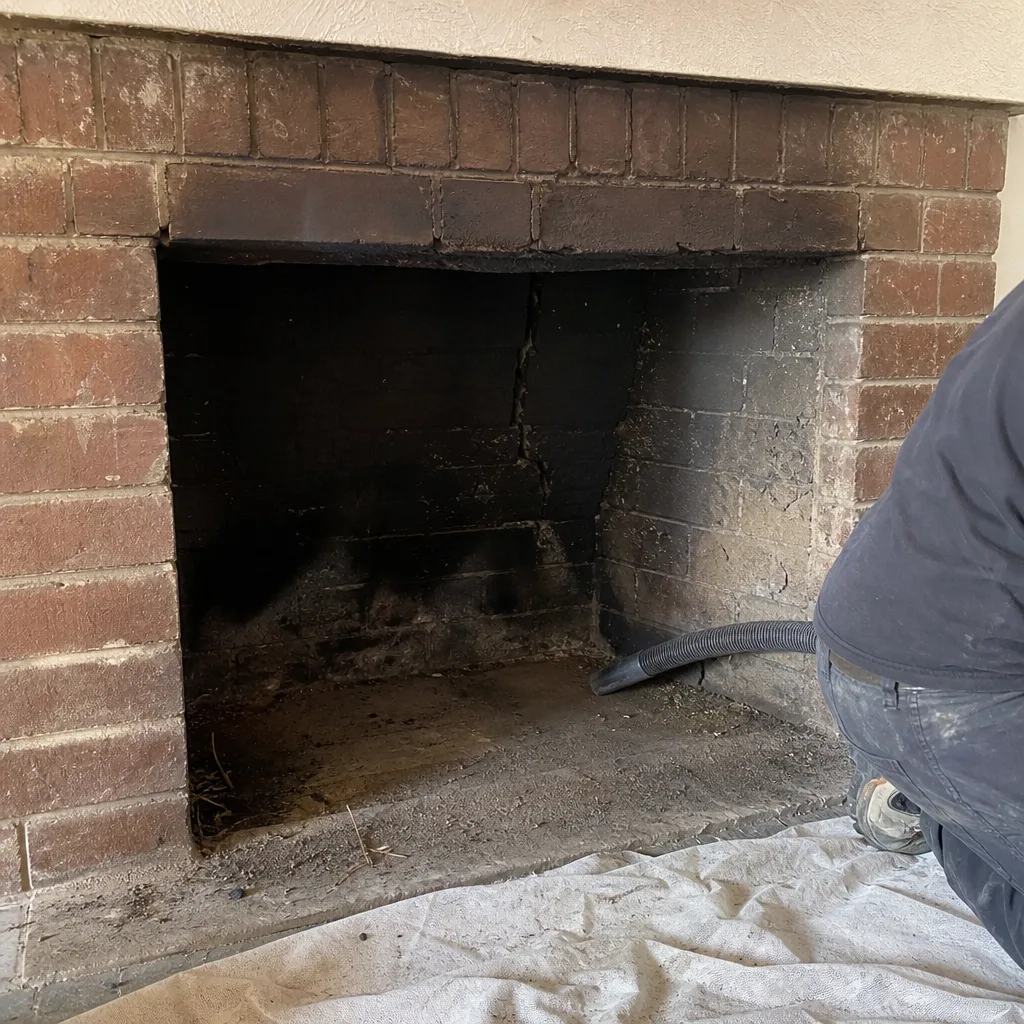 Before
 After
 Before
 After
When to Call a Professional
Call a professional for anything involving the flue interior, the firebox structure, the damper mechanism, or the chimney cap or crown. These are the parts you cannot inspect from the hearth. Call sooner if smoke comes back into the room when the fireplace is in use, if you smell a strong odor from the fireplace when it isn’t burning, if there’s visible staining on the chimney exterior, or if a home sale inspection flagged the chimney. Call before your first burn of the season, not after. And call immediately if you’ve had a chimney fire, even a small one; a fire event requires a Level 2 inspection with a camera to confirm the flue’s condition. Chimney Sweep Edinburg offers free estimates in Edinburg. Call (833) 754-6303. We answer 24/7. Fast dispatch from 7am to 7pm, Sunday through Friday.
A note on what’s genuinely dangerous
Creosote buildup and carbon monoxide are the real risks in a wood-burning chimney, and they’re serious enough that a trained professional should be the one to inspect for them. Don’t try to clear a flue from the roof or reach down a firebox with a tool to check a liner. Flue interiors can hide cracks and offsets that are invisible from either end, and a fall from a roof is a life-changing event. The right call is a professional inspection, not a ladder and a flashlight.
Frequently Asked Questions
Chimney sweeping in Edinburg is priced per job by written estimate, and the quote depends on the number of flues, whether a camera inspection is included, and what the sweep finds. A basic sweep and a Level 2 inspection are different scopes, so ask which is included before comparing numbers. The final price is set by the written estimate, so you know what you’re paying before the work starts. Call (833) 754-6303 for an exact quote. Estimates are free.
You need a new liner only if the existing flue fails inspection and a repair can’t restore it. A cracked or deteriorated clay tile liner can sometimes be resurfaced with HeatShield ceramic resurfacing, which is a repair option that avoids a full reline. When the flue can’t be resurfaced, a DuraFlex liner system is the standard replacement. The decision should follow camera evidence, not a sales pitch. Ask to see the images. If the technician can’t show you, the recommendation isn’t ready. Call (833) 754-6303 for an exact quote. Estimates are free.
Once a year is the general rule for a wood-burning fireplace, insert, or fuel-burning appliance, and it’s the baseline regardless of how mild the winter was. Light use doesn’t eliminate creosote, it just slows the buildup. If you burn heavily, or if you notice smoke coming back into the room, schedule sooner. Call (833) 754-6303 for an exact quote. Estimates are free.
Creosote accumulates in the flue with every burn, and at a certain level it becomes flammable. A chimney fire can damage the flue liner, and a damaged liner can let combustion gases into the home instead of up the chimney. The risk builds quietly; a chimney can work normally right up until it doesn’t. Skipping a sweep doesn’t cause a fire on a schedule, but it removes the inspection that would catch the buildup before it becomes a hazard. Call (833) 754-6303 for an exact quote. Estimates are free.
One sweep covers the Edinburg market, including Indian Hills. The neighborhood matters less than the chimney itself; what changes address to address is the flue construction, the firebox design, and how much the home has burned. When you call, tell us the neighborhood and the type of appliance (fireplace, insert, or stove) so the quote can be scoped properly. Call (833) 754-6303. We answer 24/7. Fast dispatch from 7am to 7pm, Sunday through Friday.
We answer 24/7. A call outside dispatch hours is booked into the next opening, Sunday through Friday, 7am to 7pm. We’re closed Saturday. You’ll never reach voicemail, and you’ll never be told to call back. Call (833) 754-6303 and someone will get you scheduled.
The Bottom Line
Hiring a chimney sweep in Edinburg comes down to three filters: verified CSIA certification, a written inspection at a named NFPA level, and a contractor who can name the product system they’d install if a repair is needed. Those three checks separate a specialist from a person with equipment. Add the five pre-booking questions and the quote check, and you’ve covered what most homeowners skip. The point isn’t to find the cheapest cleaning. It’s to have a record that survives an insurance claim or a home sale. That’s what a clean chimney plus a defensible report is worth. If you want to talk it through, Chimney Sweep Edinburg offers free estimates. Call (833) 754-6303. We answer 24/7. Fast dispatch from 7am to 7pm, Sunday through Friday.
Written by the team at Chimney Sweep Edinburg.