
Last updated November 15, 2026
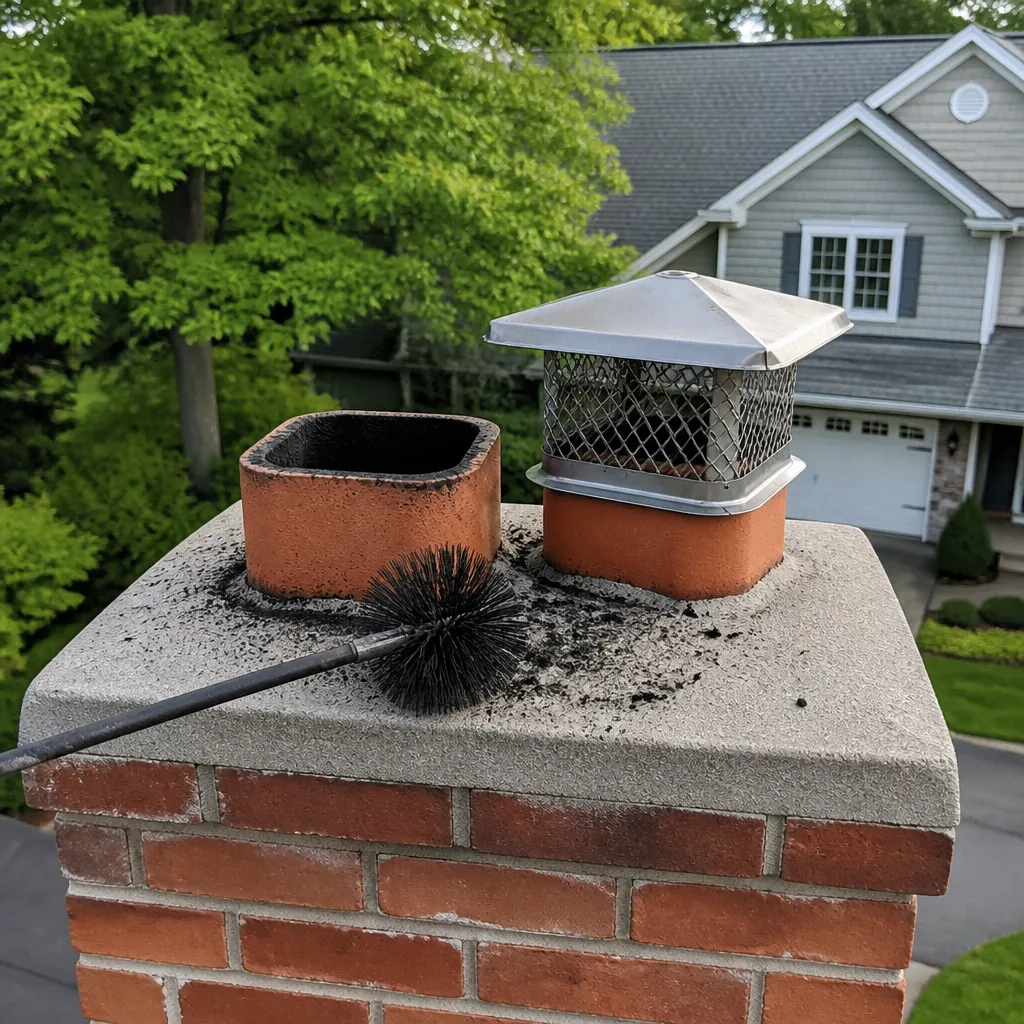 Sweep & inspection
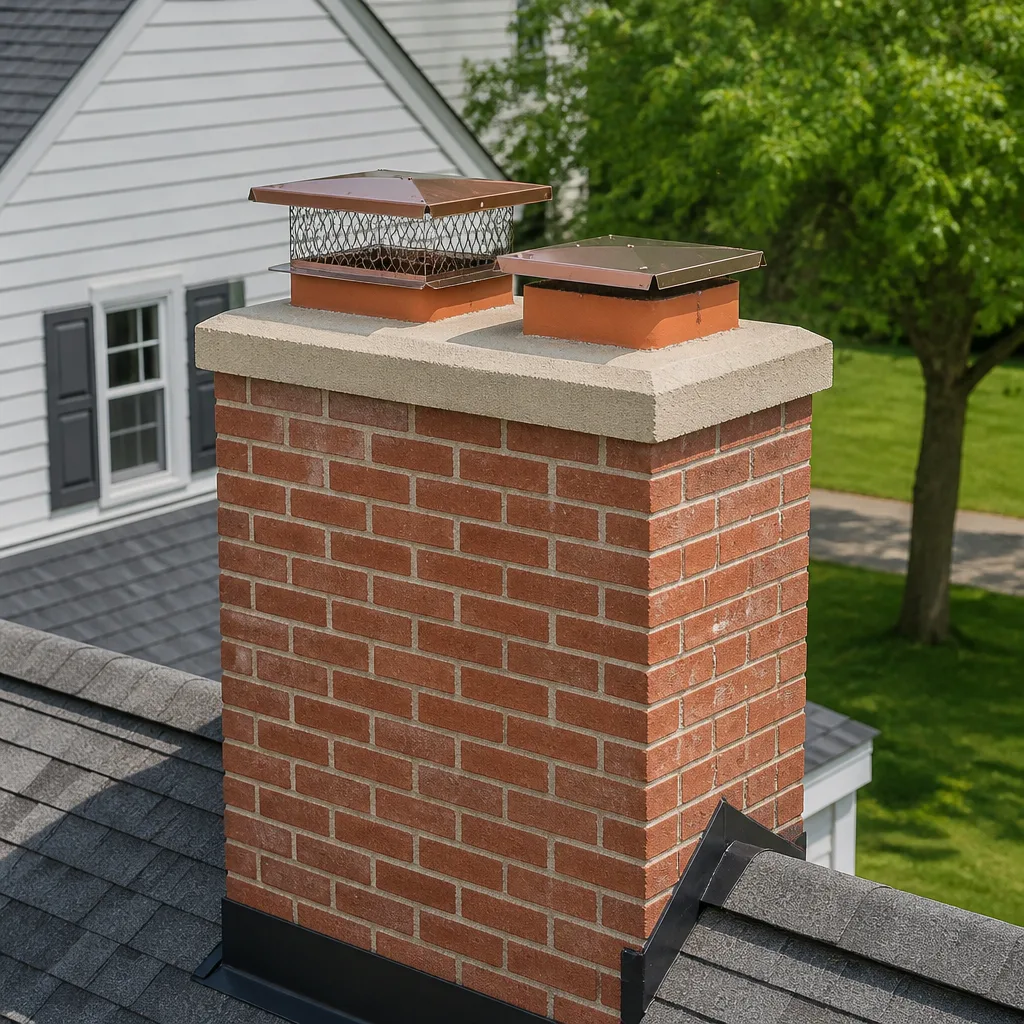 Caps & crowns
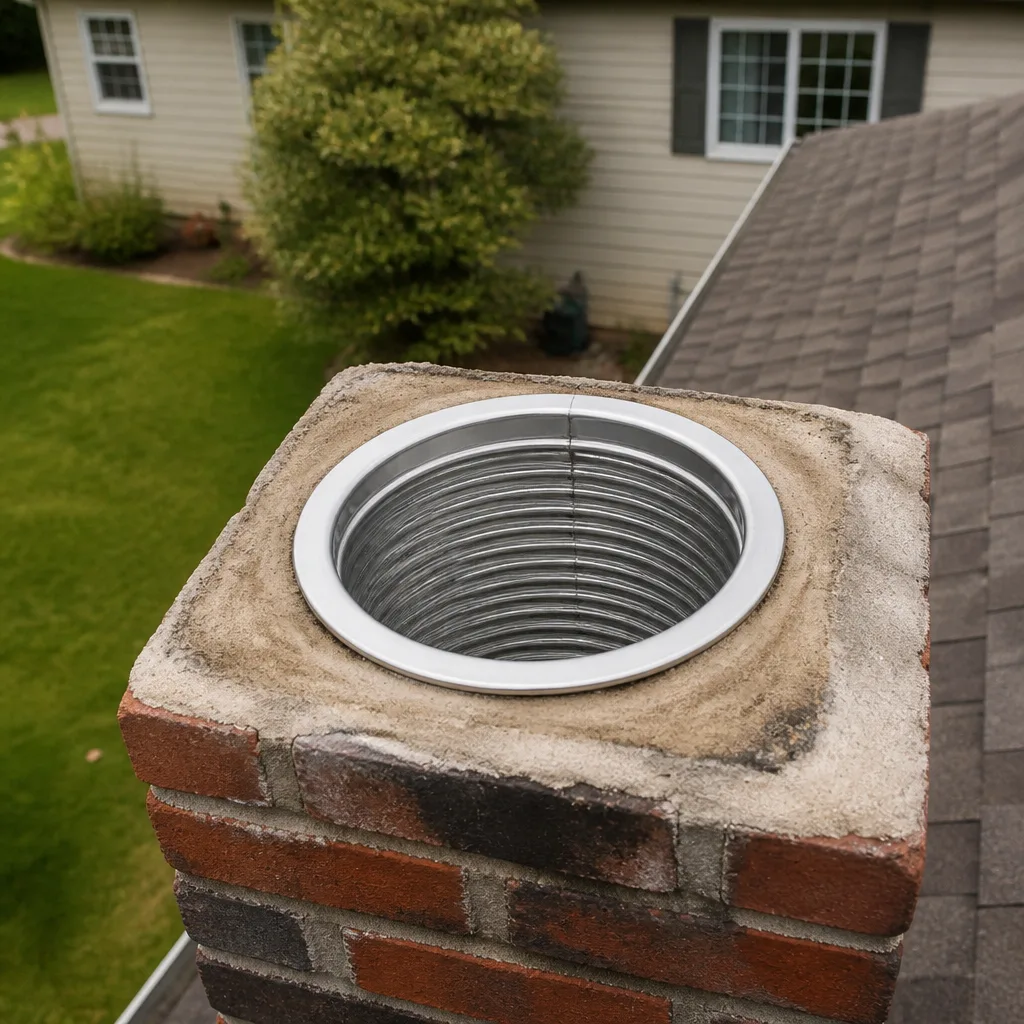 Flue relining
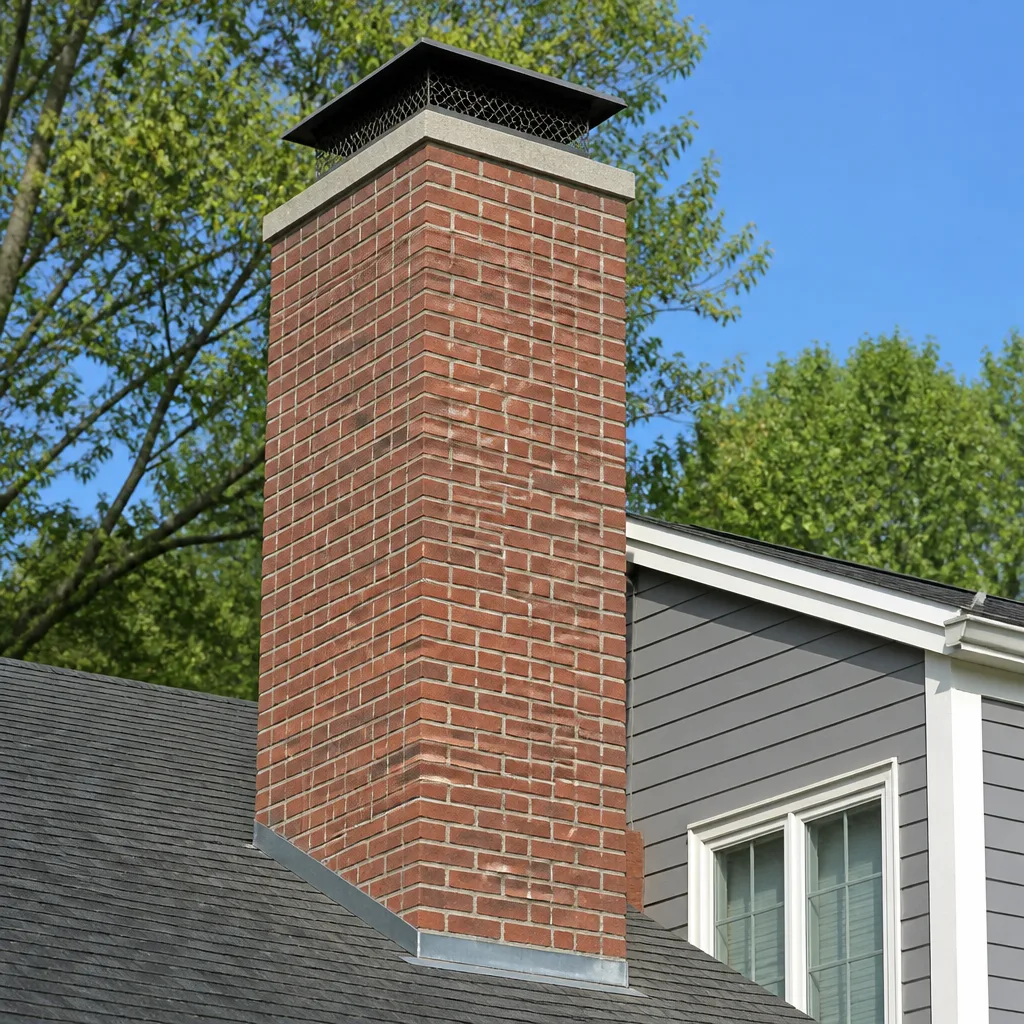 Masonry repair
 Gas fireplace service
Level 1 sweep and inspection to the NFPA 211 annual standard - flue, crown, cap, and flashing checked and photographed
Chimney sweep logs do not sweep chimneys. They loosen some creosote - which then falls where a brush and vacuum still have to collect it.
Chimney Cleaning Warning Signs: An Edinburg Homeowner’s Reference Guide
The warning signs that actually matter in an Edinburg chimney rarely announce themselves. They don’t send smoke rolling into the living room or make the house smell like a campfire in February. They show up as a faint smoky odor on a humid July afternoon with no fire burning, a chalky white bloom on the outside brick, or a damper that suddenly feels gritty when you reach for it. Most homeowners write these off as normal fireplace quirks. They aren’t. In our experience, South Texas chimneys don’t fail dramatically – they compound quietly, one small moisture or creosote problem building on another until what should have been a routine sweep turns into structural repair. This guide names the specific signals worth watching and explains the mechanism behind each one.
Quick Answer
The main chimney cleaning warning signs are an off-season smoky or musty odor, white efflorescence on exterior masonry, rust on the damper or firebox, spalling brick or crumbling mortar at the firebox, and unusual draft behavior like backdrafting or slow-starting fires. Any one of these means the flue needs a professional inspection and likely a sweep. In Edinburg’s humid climate, the odor and efflorescence signs are the two most commonly ignored, and both point to moisture interacting with creosote or masonry.
Styles & brands we work with
- Sweep & inspection
- Caps & crowns
- Flue relining
- Masonry repair
- Gas fireplace service
Table of Contents
- The Off-Season Odor Nobody Talks About
- White Staining on the Outside Brick: What Efflorescence Tells You
- Rust on the Damper and Firebox: Following the Diagnostic Chain
- Spalling Brick and Crumbling Mortar at the Firebox
- Unusual Draft Behavior and the Three Mechanical Causes
- Creosote Buildup: The Signal You Can’t See
- How Edinburg’s Climate Accelerates These Signs
- What a Homeowner Can Safely Check
The Off-Season Odor Nobody Talks About
A smoky smell in the house during a humid summer day, with no fire in the firebox and no cool weather for weeks, is the single most misread chimney warning sign in Edinburg. Homeowners assume it’s just the smell of an old fireplace. It isn’t normal, and it’s usually the first thing a trained sweep notices on a walk-through.
Here’s the mechanism. Every wood fire deposits creosote inside the flue, and creosote is hygroscopic, which means it pulls moisture out of the air. In a dry climate the deposits stay dormant most of the year. In Edinburg, where summer humidity routinely sits high for months, that creosote absorbs water vapor and gives off that acrid, smoky, sometimes sour smell that creeps through the house. The odor is strongest during rainy stretches or when the air conditioning pulls humid outside air through the chimney chase.
The smell alone isn’t the problem. The moisture load is. A flue system that stays damp for months at a time is a flue system that’s degrading from the inside, and wet creosote also makes future chimney fires burn hotter and longer when it does ignite. What the odor really tells you is that moisture is getting somewhere it shouldn’t, or that the creosote layer has built up enough to hold water in the first place.
What raises the risk of an off-season odor
- A missing or damaged chimney cap, letting rain and humid air straight into the flue
- A cracked or degraded crown at the top of the chimney, which sends water down the sides of the flue liner
- A heavy creosote layer that’s had a full season to absorb moisture
- A firebox that hasn’t been swept in multiple seasons, holding ash and soot that stay damp
- A damper that no longer seals properly when closed, drawing humid air up through the house
If the smell shows up only in the summer, that’s a humidity and moisture signal. If it shows up year-round, that’s more likely a draft or pressure problem, which we cover below. Either way, a free estimate and a proper inspection at the source is the right first step. If you’re in the northern part of the county and want to know what’s typical for your house, this guide on a chimney sweep walks through the process.
White Staining on the Outside Brick: What Efflorescence Tells You
If you’ve ever noticed a chalky white bloom along the exterior brick or mortar joints of your chimney, you’ve seen efflorescence. It looks like a salt deposit, and it is. What most Edinburg homeowners don’t realize is that efflorescence is a moisture diagnostic, not a cosmetic issue. Water is getting into the masonry, dissolving salts out of the brick and mortar, and pushing them to the surface as it evaporates.
On a healthy chimney, the brick and mortar shed water. On a compromised one, water finds a path in through a failed crown, a cracked mortar joint, spalling brick, or a missing cap, then works its way through the wall. When it evaporates, it leaves the white staining behind. The stain itself wipes off, but the water path doesn’t go away on its own.
Why South Texas humidity accelerates the problem
In a drier climate, masonry has long stretches to dry out between wet events. Edinburg’s humidity keeps the brick surface damp for weeks at a time even without rain, which means the moisture load inside the masonry never fully releases. That constant wet-dry cycling is what eats mortar joints. Over a few seasons, the same condition that causes efflorescence can progress to spalling brick, and eventually to structural movement at the top of the chimney. Efflorescence is the early warning. Spalling is the later one. Both point to the same underlying problem: the chimney’s waterproofing envelope has failed.
Efflorescence at the very top of the chimney usually points to the crown. At the base, it points to water getting in from the roofline or through a failing cap. On the side facing the prevailing weather, it can indicate a missing or degraded chimney cap letting rain straight into the flue. A chimney repair call at the efflorescence stage is far cheaper than one at the structural stage, because the fix is usually a crown repair, a cap, or repointing – not rebuilding.
If you see white staining spreading across mortar joints month after month, have it looked at before the next wet season. We’re happy to talk through what you’re seeing at (833) 754-6303.
Rust on the Damper and Firebox: Following the Diagnostic Chain
Rust inside a firebox is almost always a connected failure, not a standalone one. When a customer points to a rusty damper and asks if they need to replace it, the answer we give is that the rust is a symptom and the real question is where the water is coming from. Rust proves that moisture has been sitting in the firebox long enough to oxidize metal – which, in a chimney, means water is entering from above.
The chain of suspicion, in order
- The cap. A missing, loose, or rusted-through cap lets rain directly into the flue. Any rust in the firebox points here first.
- The crown. A cracked crown channels water down the outside of the flue liner, where it wicks in through the masonry and shows up at the firebox walls.
- The liner. If the cap and crown check out, a rusted or cracked liner is the next suspect. Metal liners rust from the inside out when a flue stays damp for a season, and a compromised liner lets water migrate into the masonry.
- The flashings and roof interface. Less common, but on steep or complex roofs, water can travel in along the flashing and show up at the firebox.
A rusty damper is one of the most reliable warning signs we know of, because it tells you a moisture pathway already exists. What it doesn’t tell you is which of the four causes above is responsible. That’s a job for an inspection, camera and all, because the fix for a rotted cap is a new cap, while the fix for a compromised liner is a liner replacement. The wrong diagnosis is expensive.
When the liner is the cause and it hasn’t corroded through, ceramic resurfacing with HeatShield is one option for restoring the flue interior without a full liner replacement, and it’s a system generalist contractors rarely stock. When the liner has failed, DuraFlex flexible liner systems are the standard we work with for both straight replacements and complex retrofit situations. Either way, the fix is scoped to what the camera actually shows.
Spalling Brick and Crumbling Mortar at the Firebox
Spalling is the step after efflorescence. Where efflorescence is a white bloom on the surface, spalling is the brick face itself breaking off in flakes or chips, and the mortar joint crumbling to the touch. If you can rub a mortar joint near your firebox opening and small pieces fall into your hand, the joint has lost its structural integrity. This is usually a symptom of the same moisture problem, one stage more advanced.
A wood-burning appliance makes this worse because the firebox opening sees two forms of stress at once: moisture from the outside, and repeated thermal cycling from the fire inside. Brick and mortar expand and contract with each heat-up and cool-down. When the brick is already waterlogged from an unresolved leak, that cycling breaks the bond faster. Edinburg’s humid climate keeps the outer brick damp through much of the year, so the firebox wall never fully dries between fires.
What gets worse if you ignore it
- Water intrudes further. Once the brick face is off, the softer interior of the brick is exposed, and it holds water more easily than the fired surface did.
- The liner stays wet. Liner failures compound faster when the surrounding masonry can’t shed water, which can mean a liner replacement down the road instead of resurfacing now.
- Smoke can leak into the house. Crumbling mortar at the firebox is one path a flue can take to leak combustion byproducts back into the living space rather than up the chimney.
- The repair gets bigger. Repointing a few joints is a small job. Rebuilding a compromised firebox wall is a much larger one.
Spalling at the firebox opening is worth calling about as soon as you notice it. The good news is that the early stage – before the brick face is fully off, before the mortar joint has gone loose – is often repairable without rebuilding. Our technicians have up to 8 years of experience reading that stage, and we’d rather see a photo of it now than a wall of it later.
Unusual Draft Behavior and the Three Mechanical Causes
Draft problems announce themselves as slow-starting fires, smoke puffing into the room when you light, a fire that won’t catch without a paper torch, or a fireplace that pulls air in from the house itself. Some of this is seasonal. In Edinburg’s mild winter, a warm chimney struggles to establish the temperature differential a fire needs to draft, and that alone can slow a fire on a cool evening. But persistent draft issues usually trace back to one of three mechanical causes.
The three mechanical causes of poor draft
- A blocked or partially blocked flue. Soot, creosote debris, a bird’s nest, or a fallen piece of masonry at the top of the flue reduces the cross-section the smoke has to travel through. The fire suffocates and the smoke backs up.
- A compromised liner or firebox seal. A liner with a crack or gap lets air in where it shouldn’t, which cools the exhaust and breaks the draft. This one is invisible from the living room and easiest to confuse with a “bad chimney.”
- Insufficient air supply in the house. Modern Edinburg homes are tight. A bath fan, range hood, or dryer running while a fire is lit can pull air out of the house faster than the fireplace can replace it, and the fire reverse-drafts. It often shows up on the coldest, most humid days of the year, when windows are closed and the house is sealed.
There’s also a South Texas-specific version of the pressure problem. On a warm day with a cold firebox and no fire, the house can draw outside air down the chimney, bringing that absorbed creosote moisture into the living room along with the downdraft. That’s the connection between the off-season odor and draft trouble – both trace to pressure and moisture in the same flue system.
Backdrafting itself is the most serious of these because it can pull combustion byproducts into the home rather than up the flue. That’s a reason to have a technician examine the whole flue path, and it’s exactly the kind of thing our inspection covers from the first sweep through to the diagnosis. The sweep and the inspection are part of the same visit, so you’re not coordinating two different contractors to get one answer.
Creosote Buildup: The Signal You Can’t See
Every warning sign above points back to creosote, and creosote is the one signal a homeowner usually can’t see. It builds in three stages. Stage one is a light, powdery soot that sweeps off easily. Stage two is a black, crusty layer that needs a proper brush. Stage three is a glazed, shiny, tar-like coating that’s baked onto the flue walls and can require chemical treatment before it can be brought back to bare liner.
Stage three is the layer that matters for fire risk, because glazed creosote ignites at a lower temperature than the earlier stages and burns hotter when it does. A chimney fire from stage three creosote can crack a liner, warp a damper, and send heat into the surrounding masonry, all with very little warning inside the house. Homeowners often describe a chimney fire as a low rumble they heard once – or they miss it entirely.
The signs that suggest heavier buildup
- Creosote visible as a dark, shiny layer when you look up the flue from the firebox
- Ash and soot accumulation beyond about a half inch in the firebox
- A fire that smokes heavily and won’t draw once it’s lit
- The off-season odor described at the top of this guide, especially in a humid spell
- A flue that hasn’t been swept in two seasons or more, or one you inherited with the house
The only way to check the inside of a flue is with a camera, and that’s why the camera inspection and photo report are part of every sweep we do. You see what we see. If the flue is clean, we tell you. If it’s at stage three, we show you and give you options – a professional sweep, an inspection, a repair, or a liner consideration. Nothing gets recommended that you can’t see on the report.
How Edinburg’s Climate Accelerates These Signs
The signs above happen everywhere, but the timing in Edinburg is specific. Three climate features drive the pace.
Humidity is high and sustained. Creosote stays hygroscopic longer here, which means the moisture-absorbing phase doesn’t reset for as many months as in a drier climate. That’s why the off-season odor shows up earlier in the year and lasts later. It’s also why efflorescence often appears on chimneys that are only a few wet seasons old.
Winters are mild, but fires are still steady through the cool months. A mild winter doesn’t mean fewer fires, it means each fire is often a shorter, cooler burn. Cooler burns produce more creosote than a hot fire does. A homeowner running a fire on cool evenings through a short cool season can still build up a real creosote layer over the course of that season, especially with damp wood or a fire that gets smoldered down rather than burning down.
Rain events are concentrated. South Texas rain tends to arrive in heavy bursts, which means a failed cap or a cracked crown catches a lot of water quickly, not a little at a time. Water that hits in bursts also stresses the masonry more – a joint that’s soaked through in one storm takes longer to shed the moisture than one wetted gradually.
There’s one more factor worth naming for the reader who’s new to the area: the typical Edinburg chimney is not doing the same work as a chimney in a colder climate, and it’s easy to assume the milder climate means the chimney needs less attention. The opposite is often true, because the moisture load is higher year-round here. Neighborhoods like Indian Hills and the older blocks closer to the city core both show it – the chimneys that see the most efflorescence and off-season odor tend to be the ones that have sat unswept for a full summer without anyone thinking to look.
What a Homeowner Can Safely Check
Some warning signs are yours to spot safely from the living room or the yard. Others live inside the flue or up on the roof, and those are the ones that call for a trained professional. Here’s the split.
Safe for a homeowner to check
- Smell the firebox with no fire burning, especially on a humid day. A smoky or musty odor is the moisture signal.
- Look at the exterior brick from the yard. White staining, flaking brick, or crumbled mortar joints are worth photographing.
- Reach for the damper with the fire cold. Roughness or rust on the metal is a starting point for inspection, not a repair.
- Watch a fire through a glass door for the first few minutes. Slow ignition, smoke curling back into the room, or weak draft are all reportable.
- Look up into the firebox with a flashlight. If you can see a dark, shiny glaze on the walls, stop lighting fires and get an inspection.
Leave to a professional
Don’t reach up the flue with a brush, don’t climb the roof to inspect the crown or cap in a South Texas afternoon heat, and don’t open a damper assembly to look at the liner. The flue is where cracked liners, glazed creosote, and loose masonry sit out of sight, and the trained eye with the right camera is the one that’s going to see the difference between a routine cleaning and a repair that needs to happen before the next fire. If you’ve been putting off a Chimney Sweep Edinburg visit because nothing “looks wrong,” the signs on this page are the reason to book one – and the reason to book it before the cool months arrive, not after.
Common Mistakes to Avoid
- Treating the summer smoky smell as a normal fireplace odor. It isn’t. In Edinburg’s humidity it’s an active moisture signal, and every extra season of it gives the creosote one more moisture cycle to build up.
- Assuming a mild winter means a low-maintenance chimney. A mild climate means more short, cool fires that deposit creosote-heavy residue. South Texas chimneys often need as much attention as chimneys in colder climates, not less.
- Painting over efflorescence or power-washing the white stain away. Both hide the moisture path without sealing it, and the stain just comes back while the masonry keeps taking on water.
- Replacing the damper when the rust was a symptom. A new damper on a chimney with an unresolved cap or crown failure rusts the same way in a season. Fix the source, then the hardware.
- Using a general handyman for a liner or firebox issue. A general contractor can patch brick. A liner, a crown, or a firebox repair needs the right material for the specific flue – HeatShield for ceramic resurfacing, DuraFlex for liner replacement, Gelco and Olympia Chimney components for caps and venting – and that’s a narrower trade than general masonry. It’s why we work with the brands the certified chimney professionals rely on, not the off-brand materials that get patched into a wall and fail in a season.
- Skipping the inspection before a sale. A home inspector flags the obvious; a chimney inspection with a camera report catches the liner and creosote issues that become a negotiation later. It’s worth having an inspection report in hand before a buyer’s inspector writes the first line.
- Burning unseasoned or damp wood. Wet wood burns cooler and deposits far more creosote. If your wood cabinet has been sitting damp through a humid summer, expect a heavier buildup, not a lighter one.
See the difference
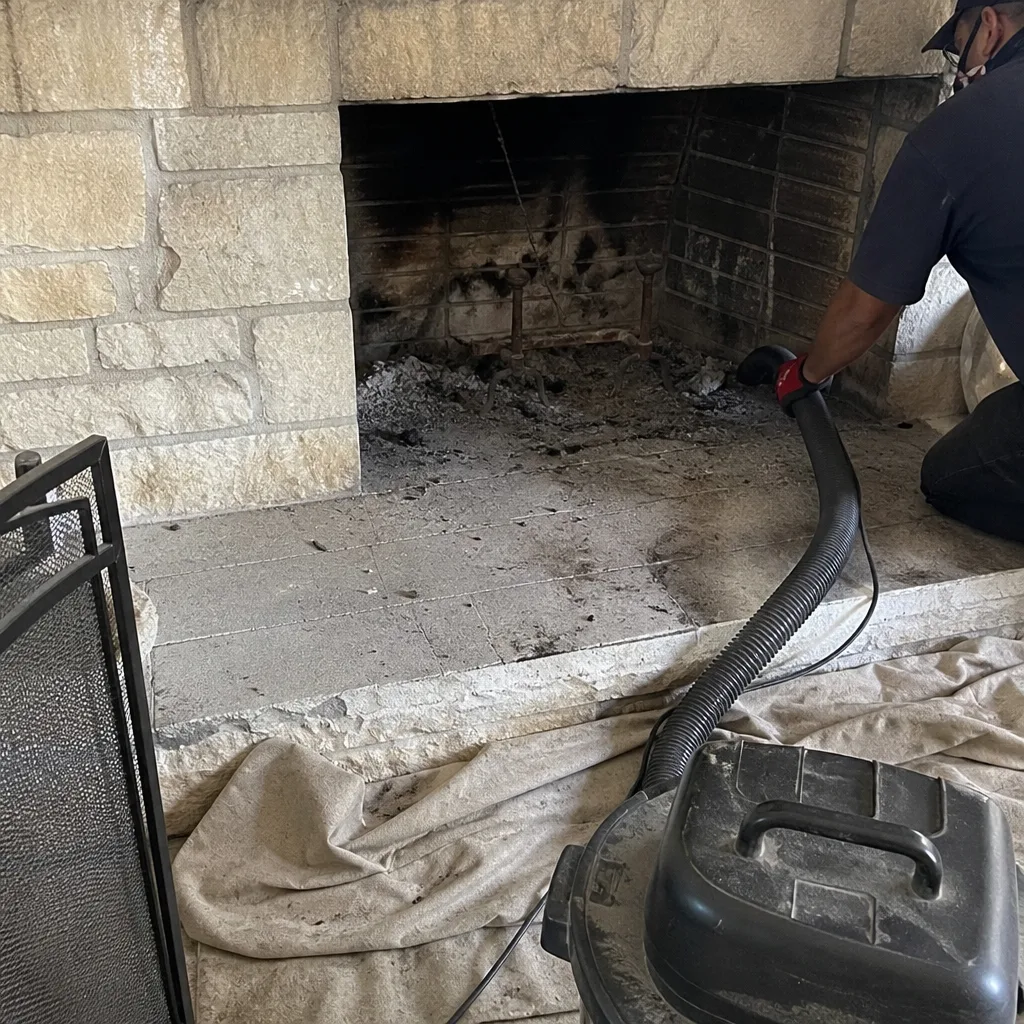 Before
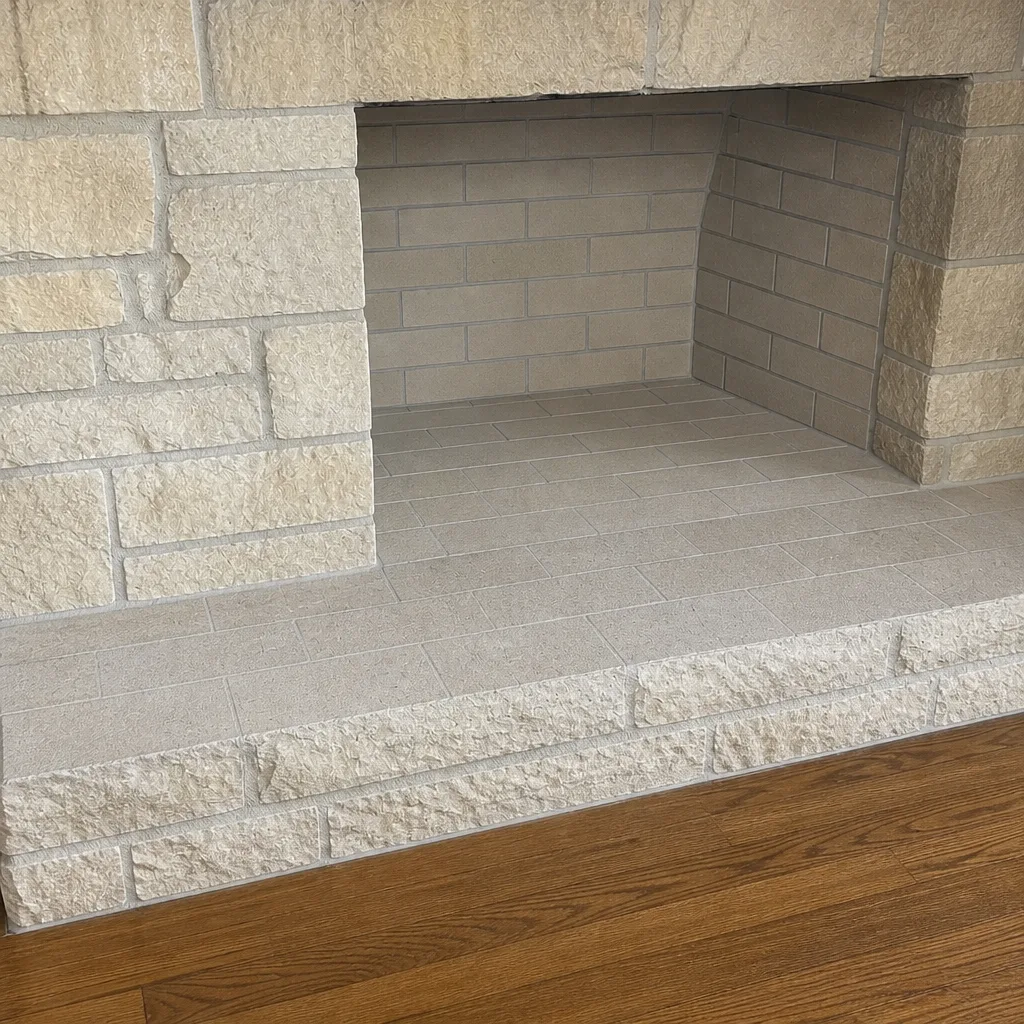 After
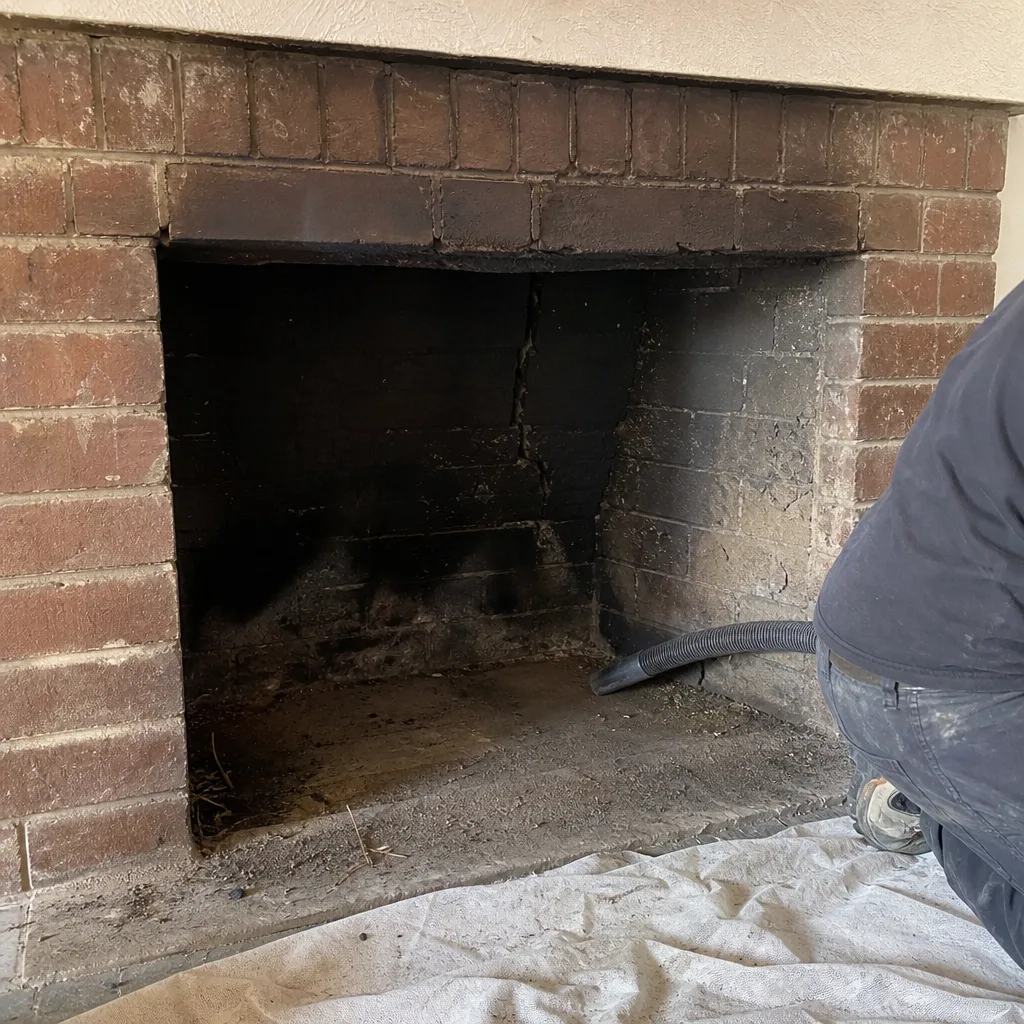 Before
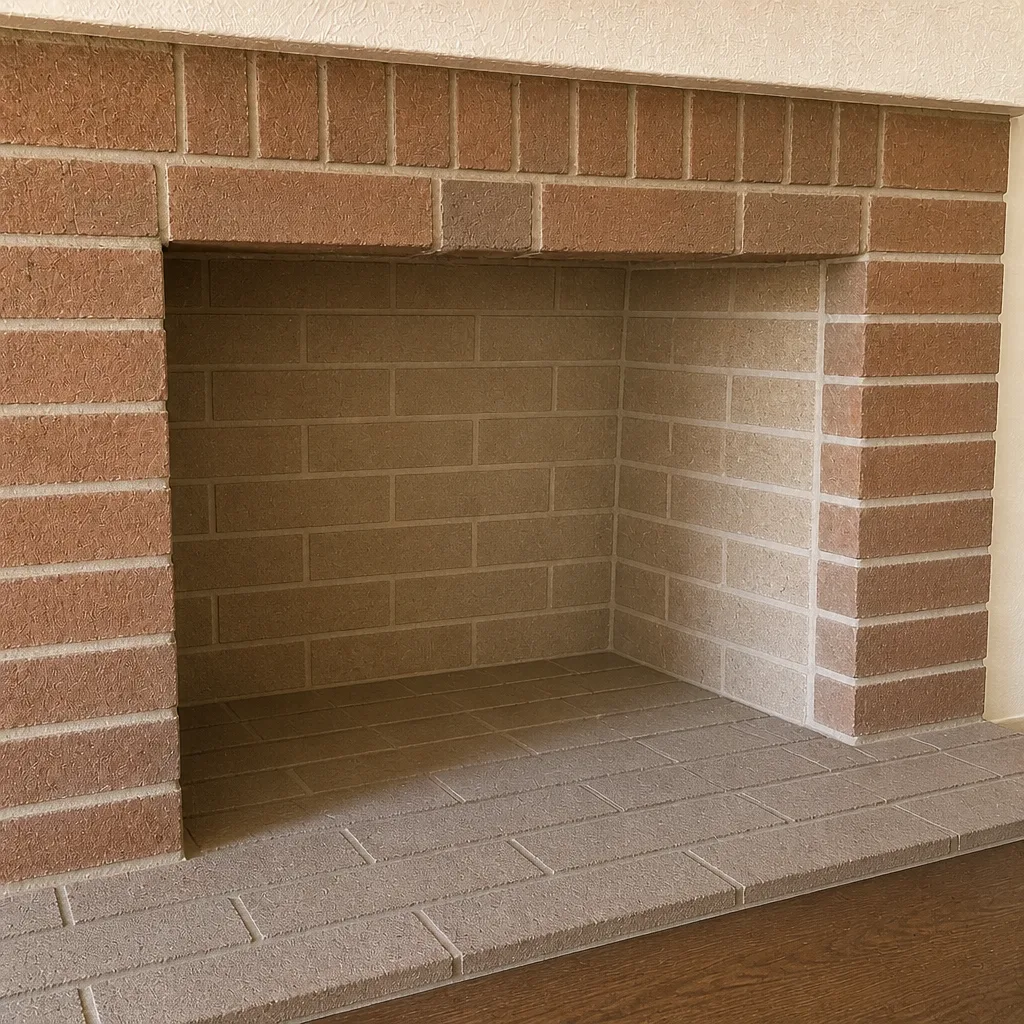 After
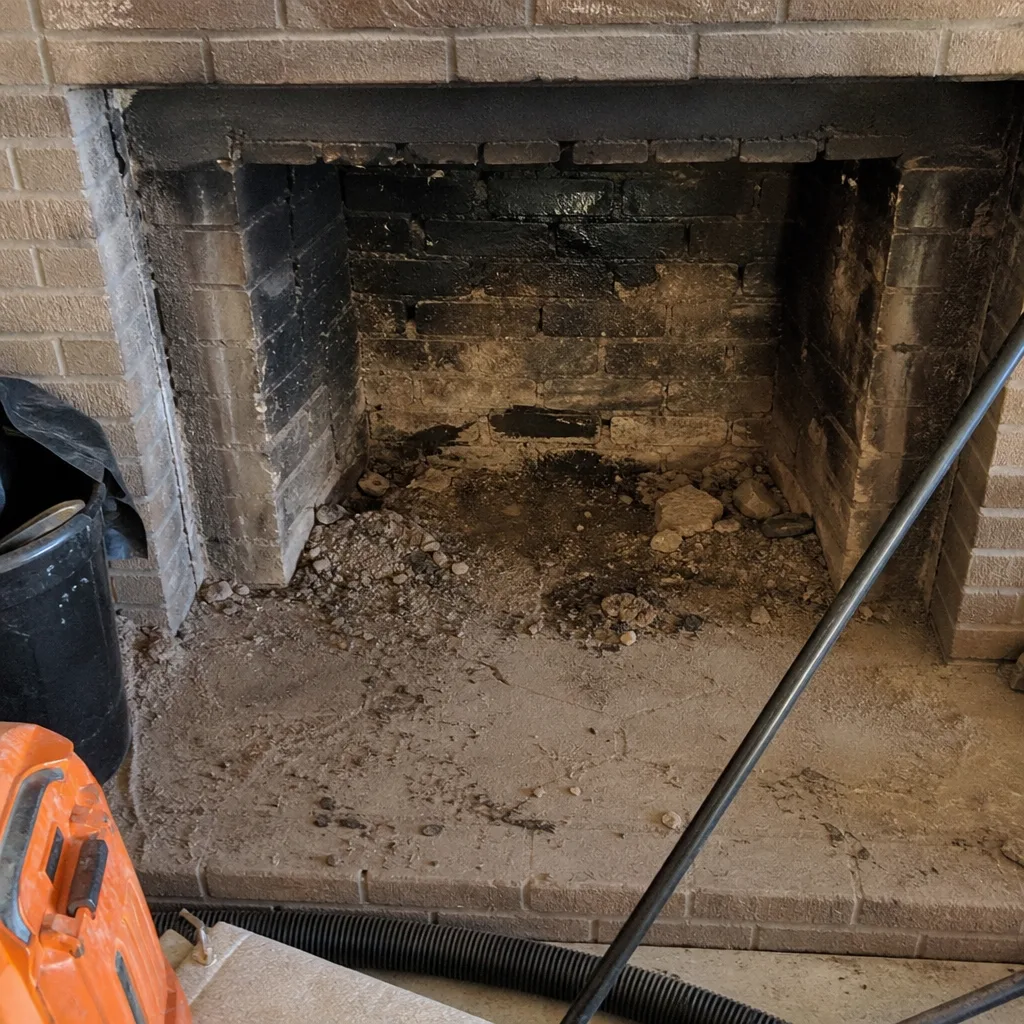 Before
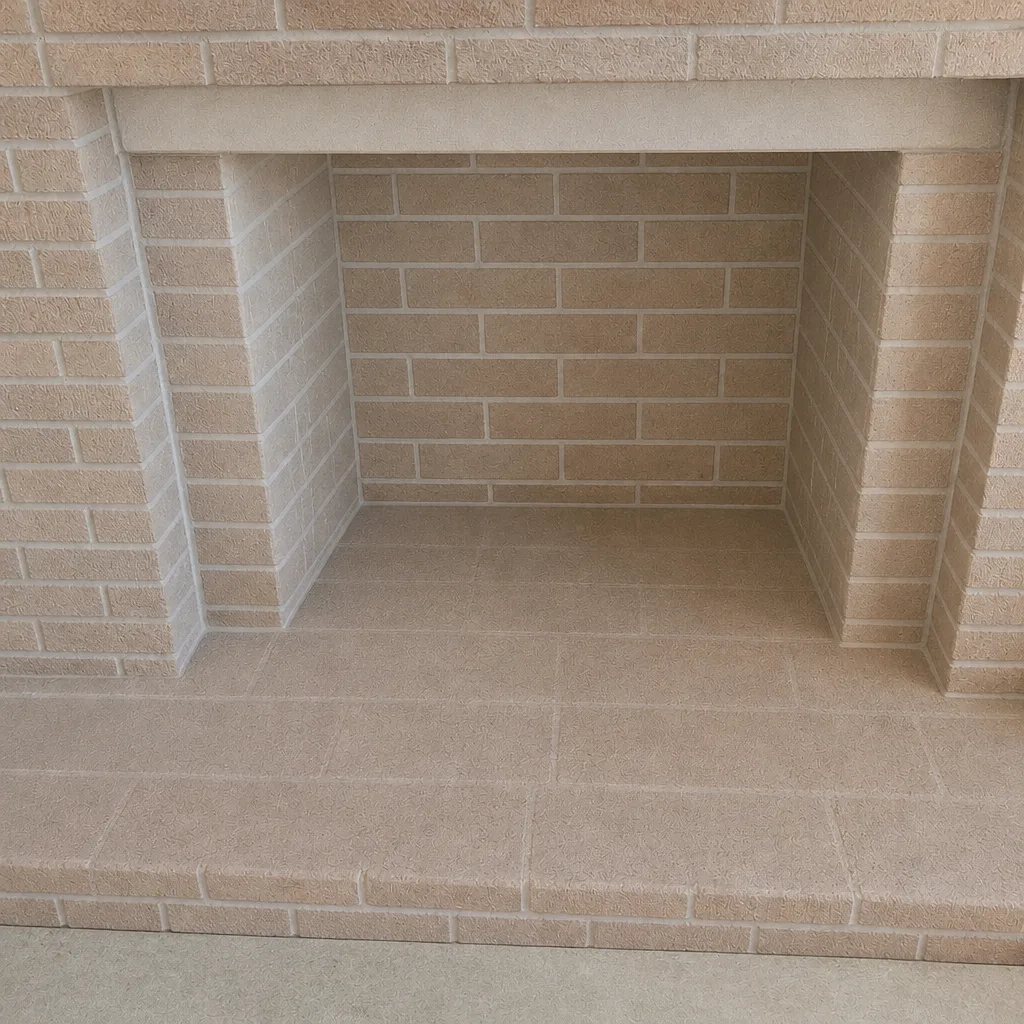 After
When to Call a Professional
Call a professional if you notice any of the following: a smoky or musty odor with no fire burning, white efflorescence on the exterior masonry, rust on the damper or firebox, spalling brick or crumbling mortar at the firebox opening, or draft problems that show up on more than one fire. Call sooner rather than later if you smell gas, see smoke escaping the firebox seal, or hear a rumbling sound from the chimney – those need an inspection before the next fire, not after. Also call if you’re buying or selling a home and need an inspection on record, or if the flue hasn’t been swept in two seasons or more.
The safe general rule is one sweep a year, and in Edinburg’s climate two sweeps is reasonable for a home with heavy fire use. When in doubt, a free estimate is the right starting point. Chimney Sweep Edinburg offers free estimates in Edinburg – call (833) 754-6303. We answer 24/7. Fast dispatch from 7am to 7pm, Sunday through Friday.
Frequently Asked Questions
A smoky or musty smell in the firebox during the humid months, with no fire burning, is the most common sign we see in Edinburg. It points to moisture being absorbed by creosote inside the flue. Call (833) 754-6303 for a free estimate if you notice it.
Yes. White staining, called efflorescence, is a sign that water is moving through the masonry, usually from a failed crown, a missing or damaged cap, or a cracked liner. It’s a moisture warning, not a cosmetic issue. Call (833) 754-6303 for a free estimate.
Not necessarily. Rust on the damper means water has been getting into the firebox from above, but the cause could be a cap, a crown, a flashing problem, or a liner. The liner only needs replacing if the camera inspection shows it’s failed; if the flue is intact, ceramic resurfacing with HeatShield can sometimes restore it. Call (833) 754-6303 and we’ll show you what the inspection finds before any repair is recommended.
Once a year is the general baseline, and two sweeps a year is reasonable if the fireplace is used heavily or if the wood is damp. Edinburg’s humidity means creosote holds moisture longer, so the off-season check matters as much as the pre-winter sweep. Call (833) 754-6303 for a free estimate.
Creosote keeps building through each fire, and moisture from the humid air keeps working it into the liner. The risk of a chimney fire rises with the creosote layer, and the risk of structural damage rises with the moisture. Neither announces itself dramatically, which is why skip-a-season problems tend to compound quietly. Call (833) 754-6303 for a free estimate before the next fire season.
You can spot a shiny glaze from the firebox opening, and that’s worth doing – but a flashlight won’t show a cracked liner, loose masonry above the firebox, or a compromised crown. Those need a camera inspection. Call (833) 754-6303 and we’ll walk the whole flue with you on the report.
The Bottom Line
Most chimney problems in Edinburg are not dramatic. The signals that matter are subtle – the summer smoky smell, the white bloom on the brick, the rusty damper, the crumbling mortar, the slow-starting fire – and each one is connected to the same underlying problem of moisture and creosote in the flue. The earlier you catch them, the smaller the repair, and the less chance you’re looking at a liner replacement instead of a sweep. One sweep a year in this climate, a camera inspection on record, and a call the moment something on this list shows up: that’s the whole strategy. We answer 24/7 and dispatch Sunday through Friday, 7am to 7pm. Call (833) 754-6303 for a free estimate.
Written by the team at Chimney Sweep Edinburg.